
Travel Guide
Pacific Oceania
Overview
Pacific Oceania is the world’s most expansive travel region — and the most underestimated.
Spread across more than 30 million square kilometres of ocean, this is a part of the world where islands outnumber roads, where ancient cultures remain extraordinarily alive, and where natural environments exist at a scale and intensity that genuinely stops you in your tracks. Volcanic peaks rise straight from turquoise lagoons. Coral reefs shelter more marine species than almost anywhere on Earth. Rainforests in Papua New Guinea harbour tribes that had no contact with the outside world until decades ago. The red deserts of Australia stretch further than most countries are wide.
This is the region of the great barrier reef and Milford Sound, of Fijian village ceremonies and Samoan tattooing traditions, of diving in Palau‘s jellyfish lakes and watching humpback whales breach off the coast of Tonga. It’s where travelers go to feel genuinely far from everywhere — and discover that far from everywhere is exactly where they wanted to be.
The best way to experience Pacific Oceania depends entirely on where in the Pacific you’re going.
Why Travel to the Pacific Oceania?
Pacific Oceania rewards every type of traveler — though it remains one of the most overlooked regions by international visitors, which is precisely part of its appeal.
Nature and adventure travelers have more here than anywhere else on Earth. Australia alone contains more unique wildlife, extreme landscapes, and outdoor experiences than most continents. New Zealand is the world capital of adventure tourism — bungy jumping, skydiving, glacier hiking, and white-water rafting all in a single country of staggering scenic beauty. Palau and the Solomon Islands are among the world’s top ten dive destinations. Vanuatu has an active volcano you can walk to the rim of.
Culture seekers will find some of the world’s most intact and living Indigenous traditions. Melanesian, Polynesian, and Micronesian cultures each carry distinct languages, art forms, ceremonies, and spiritual practices that have survived centuries of colonial disruption. In Papua New Guinea, over 800 languages are still spoken. In Samoa and Tonga, traditional fa’a Samoa and Tongan royal customs shape daily life in ways visitors find deeply moving.
Beach and island travelers have an almost infinite canvas. Fiji‘s 330 islands deliver some of the world’s most iconic tropical escapes. Tuvalu and Kiribati sit so low in the ocean they’re at risk of disappearing — making them among the most poignant and urgent travel destinations on Earth right now.
It’s also one of the most genuinely remote travel experiences available. In a world where everywhere feels increasingly accessible, Pacific Oceania still delivers the sensation of arriving somewhere truly different.
When to Go to the Pacific Oceania
Pacific Oceania doesn’t follow a single season — it’s a region of enormous geographic spread, and timing varies significantly by destination.
Australia and New Zealand follow Southern Hemisphere seasons, meaning their summer runs from December to February and winter from June to August. The best time to visit varies by region — Australia’s tropical north is best in the dry season (May to October), while the south and New Zealand are most popular in their summer months. The tropical island nations of Fiji, Samoa, Tonga, and Vanuatu run on a wet season (November to April, with cyclone risk) and a dry season (May to October) pattern, with the dry season offering the most reliable travel conditions. Micronesia, Palau, and Papua New Guinea are best visited during their respective dry seasons, which vary by specific location.
The good news is that with so many countries spread across such a vast region, there is always somewhere in Pacific Oceania that’s in perfect condition — no matter what time of year you’re traveling.
Regions of the Pacific Oceania
Pacific Oceania is traditionally divided into three main cultural and geographic regions, plus the continental anchors of Australia and New Zealand. Understanding this structure makes planning a trip — and choosing the right combination of destinations — far more intuitive.
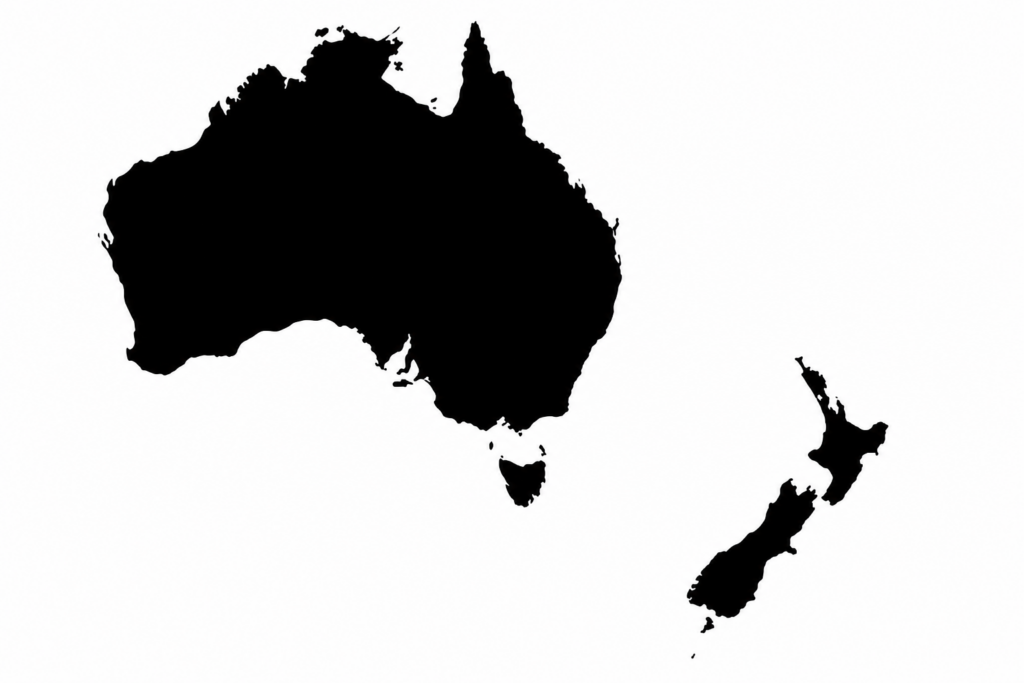
Australia & New Zealand
Australia and New Zealand are the region’s two most visited and most developed destinations — and two of the most distinct travel experiences on Earth. Australia is a continent unto itself, with tropical rainforests, outback deserts, world-class cities, and the Great Barrier Reef all within its borders. New Zealand is smaller but arguably even more scenically dramatic — the country that served as Middle-earth for a reason. Both countries are anchor destinations in their own right, and both reward extended stays far beyond what most first-time visitors plan for.

Melanesia
Melanesia is the most geographically and culturally complex sub-region of the Pacific — a collection of large, mountainous, rainforest-covered islands stretching from Papua New Guinea to Vanuatu and the Solomon Islands. This is the Pacific at its most raw and extraordinary — ancient tribal cultures, WWII wreck diving, active volcanoes, and coral reefs that rival the Maldives without a fraction of the crowds. It’s the part of the Pacific that rewards serious travelers willing to go a little further off the map.

Polynesia
Polynesia covers the vast central and eastern Pacific — a triangle stretching from Hawaii in the north to New Zealand in the southwest and Easter Island in the southeast. Within your site’s coverage, the Polynesian nations include Samoa, Tonga, and Tuvalu. These are islands of extraordinary natural beauty and deeply rooted cultural identity — where humpback whale watching, traditional tattooing, kava ceremonies, and some of the Pacific’s most genuine hospitality experiences await travelers who make the journey.

Micronesia
Micronesia is the Pacific’s most scattered sub-region — thousands of tiny islands and atolls spread across the western Pacific north of the equator. It’s one of the world’s premier diving destinations, with Palau’s iconic marine lakes and WWII wrecks, Truk Lagoon’s sunken Japanese fleet, and some of the clearest, most biodiverse ocean environments on the planet. The Marshall Islands, Kiribati, Nauru, and Federated States of Micronesia are among the world’s least-visited countries — an increasingly rare distinction that carries its own powerful appeal.
Pacific Oceania by the Numbers
Countries
14
Total area
Ocean: ~30 million km²
Land: ~9 million km²
Population
~44 million
Languages
English (widely spoken), French (New Caledonia, French Polynesia), 800+ Indigenous languages in Papua New Guinea alone
Ethnic Groups
2,300+
Currencies
Multiple — Australian Dollar widely used across several Pacific nations
Time Zones
UTC+8 to UTC+13
Most Visited
Australia, New Zealand, Fiji, Vanuatu, Palau
Getting to the Pacific Oceania
Pacific Oceania is remote by definition — but major gateway cities are well-connected from North America, Asia, and Europe, and from those hubs, onward connections across the Pacific island nations are manageable with the right planning.
Key gateway airports:
- Sydney International (SYD) — Australia’s primary hub; excellent connections from North America, Europe, and Asia; strong onward network to Pacific island nations
- Auckland International (AKL) — New Zealand’s main gateway; Air New Zealand connects extensively to Pacific island nations including Samoa, Tonga, Fiji, and Cook Islands
- Nadi International, Fiji (NAN) — the Pacific’s central hub; Fiji Airways connects to most island nations across the region
- Brisbane International (BNE) — secondary Australian gateway; strong connections to Pacific islands and Asia
- Melbourne International (MEL) — major Australian hub; good connections for those routing through Southeast Asia
- Port Moresby, Papua New Guinea (POM) — gateway to Melanesia; Air Niugini connects to the broader Pacific
Pro tip: Auckland and Sydney are the best bases for building a multi-destination Pacific trip. Fiji’s Nadi airport functions as the Pacific’s connecting hub — many inter-island routes in the south and central Pacific route through here. Book island-to-island legs well in advance, as small island nations often have limited flight frequency and seats sell out quickly.
Where to Stay
Accommodation across Pacific Oceania spans an enormous range — from backpacker hostels in Sydney and Auckland to some of the world’s most celebrated overwater bungalow resorts in Fiji and beyond.
Budget: Hostels, guesthouses, and budget hotels are widely available in Australia and New Zealand, with excellent options in every major city and along popular touring routes. In the Pacific islands, budget accommodation is more limited but available — village homestays in Samoa, Vanuatu, and Solomon Islands offer some of the most authentic travel experiences in the region at very low cost.
Mid-range: Boutique lodges, resort properties, and well-equipped guesthouses run $100–250/night across most of the region. New Zealand excels in this category with exceptional eco-lodges and boutique properties throughout both islands. Fiji’s mid-range resort scene is well-developed and highly competitive.
Luxury: Pacific Oceania has some of the world’s most spectacular luxury properties. Fiji’s overwater bungalows — at properties like Laucala Island, Kokomo Private Island, and the Mamanuca and Yasawa island resorts — are world-class. Australia has ultra-luxury lodges in the outback, Whitsundays, and Daintree that rival anything globally. New Zealand‘s lodge scene — particularly properties like Huka Lodge and Eagles Nest — is genuinely world-renowned. Expect $400–3,000+/night for the region’s top-end properties.
Unique stays: Overwater bungalows in Fiji · Outback station stays in Australia · Village homestays in Samoa and Vanuatu · Live-aboard dive boats in Palau and the Solomon Islands · Wilderness lodges in Papua New Guinea‘s highlands · Farmstays throughout New Zealand
Featured Cities
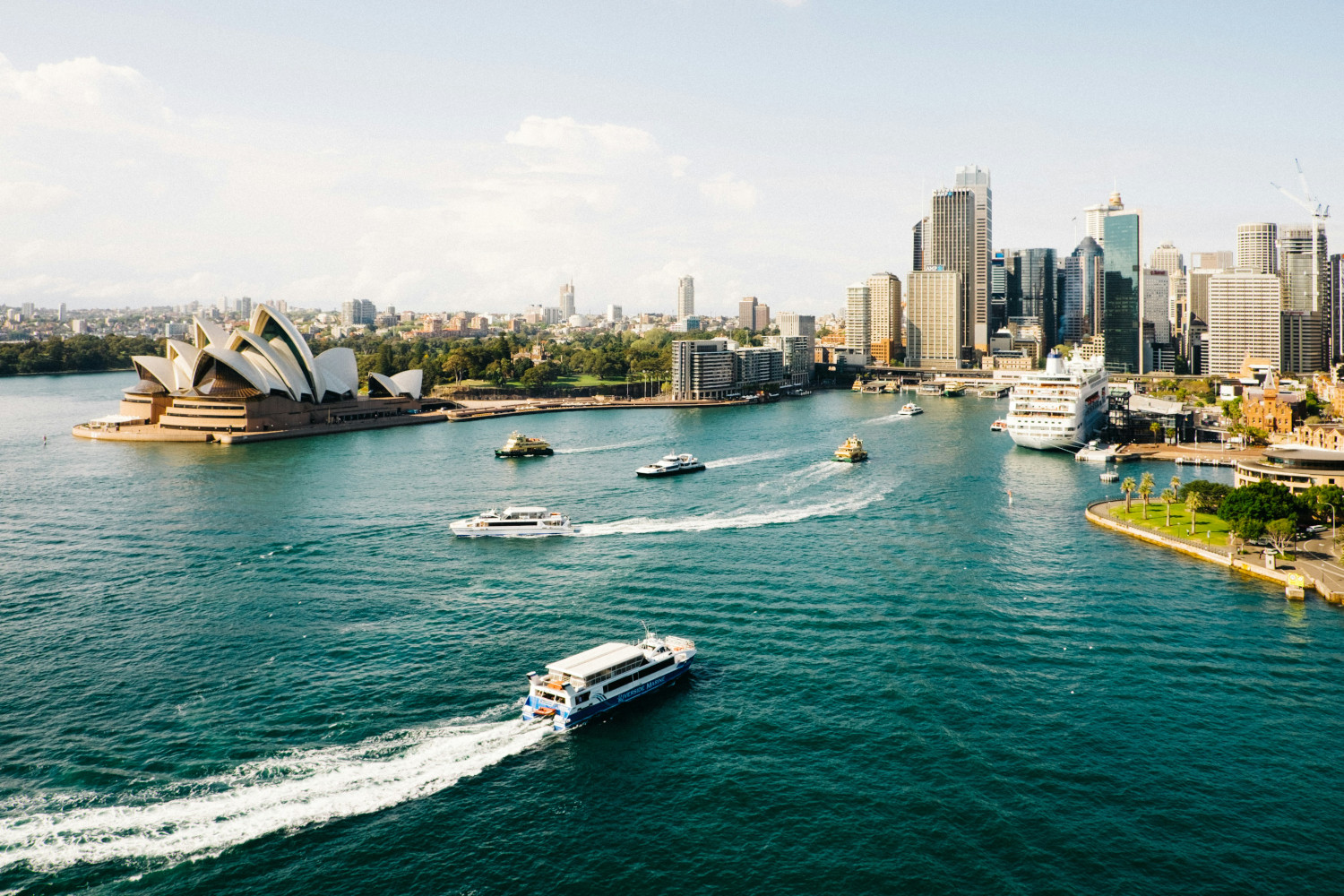
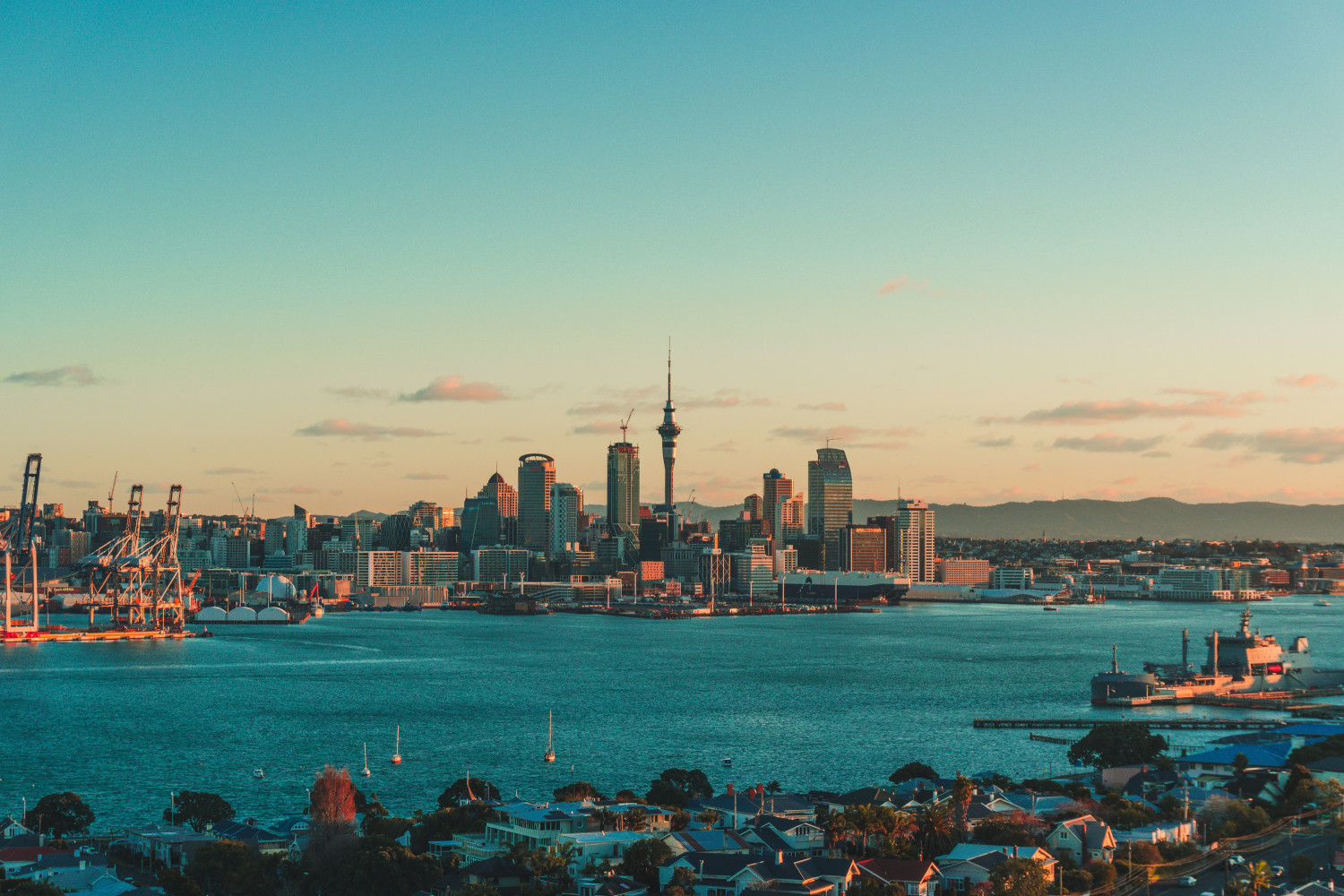
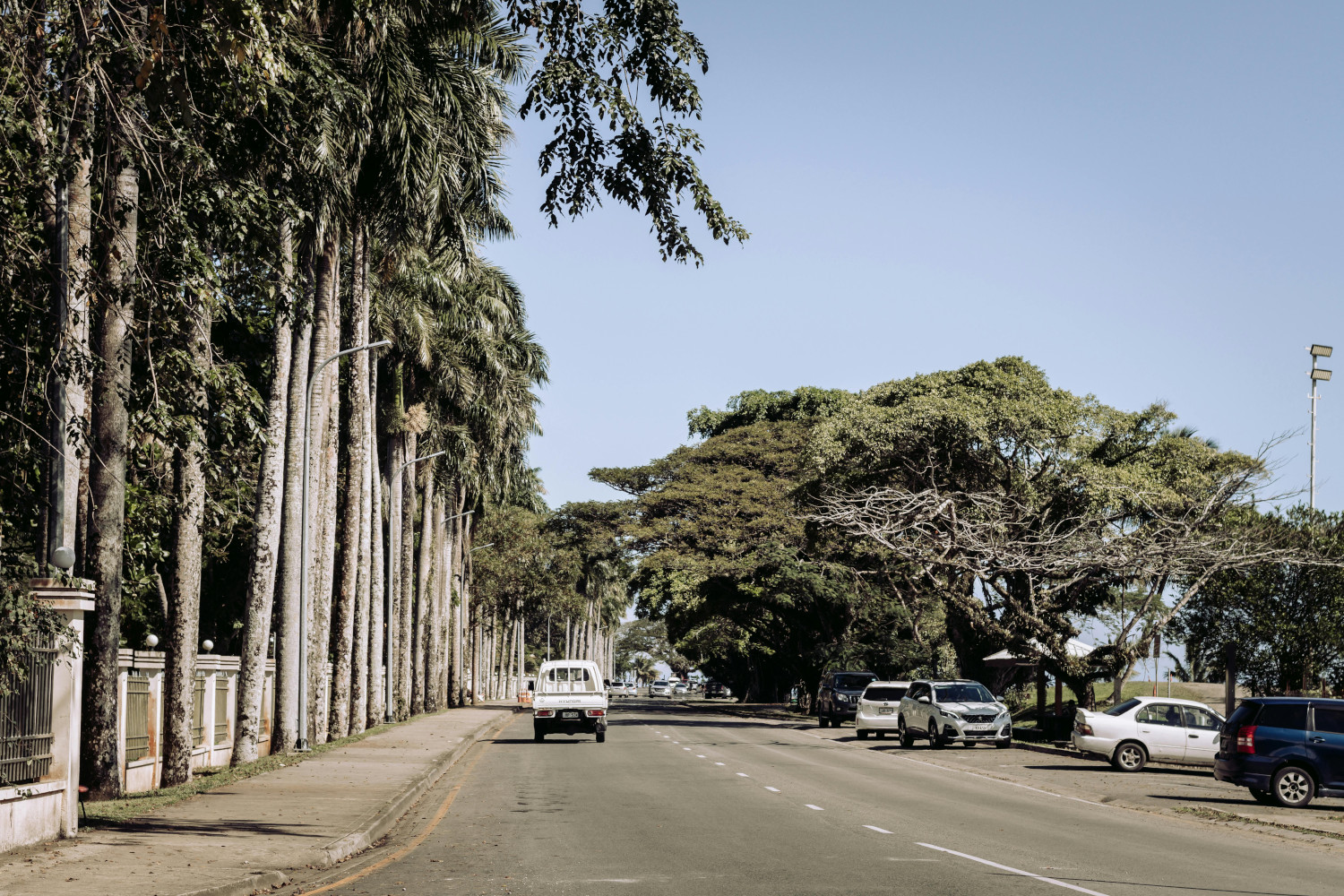
Getting Around
Getting around Pacific Oceania is one of the region’s greatest logistical challenges — and part of what makes it feel so genuinely adventurous.
Flights: Flying is the only practical way to move between island nations, and for covering the vast distances within Australia. The domestic aviation networks of Australia and New Zealand are excellent and competitive. Inter-island flights within Fiji, Papua New Guinea, and Vanuatu are available but small, infrequent, and should always be booked well in advance.
Ferries & boats: Essential for island-hopping within Fiji‘s Mamanuca and Yasawa island groups, for reaching outer islands in Tonga and Samoa, and for inter-island travel in Solomon Islands and Vanuatu. Schedules can be irregular — build flexibility into your itinerary.
Rental car: The best way to explore Australia and New Zealand independently. Campervans are enormously popular in both countries and are an excellent way to cover ground while keeping accommodation costs down. Road conditions are good throughout both countries, though outback Australia requires a 4WD and careful preparation for remote driving.
Campervan & self-drive: New Zealand’s campervan culture is one of the world’s best-developed — freedom camping, well-equipped campgrounds, and spectacular scenery make it one of the great self-drive destinations on Earth.
Local transport: In smaller island nations, transport is typically a mix of local buses, shared taxis, and boats. Infrastructure varies significantly — Samoa and Tonga have reasonable local networks; Kiribati, Nauru, and Tuvalu are so small that transport is rarely a logistical issue at all.
Live-aboard dive boats: For serious divers visiting Palau, Micronesia, or the Solomon Islands, live-aboard vessels are both a transport option and an accommodation solution — and often the best way to access the most remote and spectacular dive sites.
Things to Do
Pacific Oceania’s range of experiences stretches from the world’s most iconic natural wonders to some of its most remote and untouched wilderness. A shortlist of the unmissable:
Wildlife & nature: Great Barrier Reef snorkeling and diving · Milford Sound kayaking · Whale watching in Tonga · Jellyfish Lake swimming in Palau · Birdwatching in Papua New Guinea · Uluru at sunrise · Fiordland hiking · Kangaroos and quokkas in the wild
Adventure: Bungy jumping in Queenstown · Skydiving over Lake Taupo · Volcano trekking in Vanuatu · WWII wreck diving in the Solomon Islands · Surfing in Samoa · Outback 4WD expeditions · Glacier hiking on the South Island · Whitewater rafting on the Shotover River
Culture & history: Papua New Guinea’s Goroka Show highland festival · Samoan fa’afafine cultural experiences · Tongan royal traditions and kava ceremonies · Aboriginal Dreamtime tours in Australia · Māori cultural experiences in New Zealand · WWII memorial sites across the Pacific
Beaches & islands: Fiji’s Yasawa Islands · Whitsundays sailing · Vanuatu’s Champagne Beach · Palau’s Rock Islands · Great Keppel Island · Tonga’s Ha’apai group · The Cooks (via New Zealand routing)
Food & urban experiences: Sydney’s restaurant and harbour scene · Melbourne’s world-class coffee culture and laneways · Auckland’s Waitemata Harbour dining · Fiji’s village feasts · Papua New Guinea market culture
Food & Drink
Pacific Oceania’s food story is one of enormous contrast — from world-class urban dining to ancient earth-oven traditions that haven’t changed in centuries.
Australia and New Zealand are home to genuinely world-class food cities. Sydney and Melbourne consistently rank among the world’s best dining destinations, with food cultures built on exceptional local produce, strong Asian culinary influence, and a café and coffee culture that sets a global standard. New Zealand’s food scene is quieter but exceptional — lamb, venison, Bluff oysters, and some outstanding cool-climate wines from Marlborough, Hawke’s Bay, and Central Otago.
Melanesia is where food gets elemental. The lovo and mumu — traditional earth ovens used in Fiji and Papua New Guinea respectively — produce slow-cooked meats and root vegetables wrapped in banana leaves that are among the most satisfying eating experiences in the Pacific. Fijian kokoda (raw fish cured in citrus and coconut cream) is the region’s standout dish and one of the great ceviches of the world.
Polynesia has a food culture built on the staples of the Pacific — taro, breadfruit, coconut, fresh fish, and pork. In Samoa, the umu feast is a cultural institution. In Tonga, lu pulu (corned beef and coconut cream wrapped in taro leaves) is the national comfort food. Kava — the mildly sedative traditional drink made from pepper plant roots — is the social lubricant of Polynesia and an experience every visitor should have at least once.
Micronesia keeps it simple — fresh seafood, rice, breadfruit, and coconut dominate in Palau and the Marshall Islands. The appeal here is less about cuisine and more about eating incredibly fresh fish within sight of the reef it came from.
Eating local is essential across the Pacific islands. Resort dining is available everywhere but often generic — the best experiences come from village feasts, market food, and accepting invitations to eat with locals whenever they arise.
Safety in the Pacific Oceania
Pacific Oceania is one of the world’s safer travel regions overall — but safety profiles vary significantly between the developed nations and the more remote island destinations.
Generally very safe: Australia and New Zealand are among the safest countries in the world for travelers, with excellent infrastructure, reliable emergency services, and low crime rates. Fiji, Samoa, Tonga, and Palau are also considered safe and welcoming for international visitors.
Safe with standard precautions: Vanuatu, Solomon Islands, Micronesia, Marshall Islands, Kiribati, and Tuvalu are generally safe for travelers but have limited emergency infrastructure — travel insurance with medical evacuation coverage is essential.
Require extra research: Papua New Guinea requires more careful planning than most Pacific destinations — Port Moresby and some highland regions have higher crime rates, and traveling with local guides and vetted operators is strongly recommended. The rewards for doing so are extraordinary, but it is not a destination to approach casually.
Common sense across Pacific Oceania:
- Comprehensive travel insurance with medical evacuation cover is non-negotiable across the smaller island nations — medical facilities outside Australia and New Zealand are very limited
- Cyclone season (November–April) across the tropical Pacific requires flexibility in travel plans and awareness of weather systems
- Ocean safety is critical — currents, rips, and marine hazards vary enormously; always follow local advice before swimming, diving, or boating
- Respect cultural protocols in Pacific island communities — dress modestly when visiting villages, ask before photographing people, and follow guidance on kava ceremonies and other traditions
- Australia’s natural environment carries its own risks — sun exposure, rips, and wildlife require awareness and preparation
- Always check current government travel advisories before visiting Papua New Guinea or any remote island nation
Currency
Pacific Oceania uses a wide range of currencies — from the Australian Dollar (AUD) and New Zealand Dollar (NZD) to the Fijian Dollar (FJD), Samoan Tālā (WST), and Tongan Paʻanga (TOP). Several smaller Pacific nations use the Australian Dollar as their official currency, making it the region’s most useful backup to carry.
Cash vs card: Australia and New Zealand are highly cashless — cards and mobile payments are accepted almost universally. In the Pacific islands, the picture is more mixed — resort areas in Fiji and Vanuatu take cards, but markets, local transport, village stays, and smaller businesses throughout the islands are cash-only. Always carry local currency when venturing beyond resort areas.
ATMs & exchange: ATMs are widely available in Australia, New Zealand, and main towns in Fiji, Samoa, and Vanuatu. In smaller island nations — particularly Nauru, Tuvalu, Kiribati, and Marshall Islands — ATM access is extremely limited or nonexistent. Bring sufficient cash before arriving.
Tipping culture: Tipping is not standard in Australia or New Zealand — it’s appreciated but never expected. In the Pacific island nations, tipping is generally not part of local culture but is welcomed in resort settings. Follow the lead of your accommodation on local customs.
Costs: The region spans a wide range. Australia and New Zealand are expensive by global standards — expect $150–300+/day for comfortable mid-range travel. Fiji‘s resort scene can be equally expensive, though budget options exist. The smaller Pacific island nations are often surprisingly costly due to their remoteness and reliance on imported goods — Palau in particular is one of the more expensive destinations in the region. Samoa, Tonga, and Vanuatu offer better value for independent travelers.