
The Complete Family-Friendly Accommodation Guide: How to Choose the Right Place to Stay with Kids
navigate this guide
Quick note: Some links in this post are affiliate links, meaning I earn a small commission if you buy through them — at no extra cost to you. I only recommend gear I'd genuinely pack myself.
Book the wrong accommodation on a family trip and the whole thing unravels. A room too small for five people to coexist at 6am. A hotel with no pool and no breakfast within walking distance. A vacation rental where the kitchen is a decorative gesture. A resort that claimed to be “family friendly” because they had a slide in the pool.
Book the right one, and suddenly everything is easier. Kids are entertained. Parents have breathing room. Bedtime actually happens. You leave the trip feeling like you went on holiday rather than just survived one.
This guide covers everything: every accommodation type that works for families, what to look for before you book, the questions to ask that most parents don’t think to ask, a complete breakdown of all-inclusive versus self-catering versus hotel, real budget numbers by category, the best booking platforms, and tips by age group that genuinely change how you travel.
This is the resource you read before you search for accommodation, not after you’ve already made a frustrated booking.
1
JAN
Why Accommodation Makes or Breaks a Family Trip
Solo or couple travel is forgiving. If the hotel is small or slightly inconvenient, you adapt. You spend most of your time out anyway.
Family travel is different. Young children need reliable routines — nap times, early bedtimes, middle-of-the-night wake-ups, mealtimes that cannot easily be shifted. All of this anchors your trip to wherever you’re sleeping. The accommodation is not just where you stay. It’s the base of operations, the decompression space, the place where tired kids go to recover between days, and the place where you as a parent either have some peace or don’t.
The accommodation choice also determines your daily logistics more than almost anything else. A hotel with a buffet breakfast means you don’t have to solve the morning meal problem. A rental with a kitchen means snacks and early dinners are manageable. A resort with a kids club means two hours of adult time mid-afternoon. A place with no pool, no outdoor space, and a single small room means you’re all climbing the walls by day three.
None of this means you need to spend a fortune. Budget family accommodation done well is often better than overpriced “family resorts” that deliver noise and chaos rather than actual family-friendly design. The key is knowing what to look for.
Quick Decision Guide
Not sure which accommodation type fits your trip? Here’s the shorthand used by experienced family travelers.
BEACH HOLIDAY
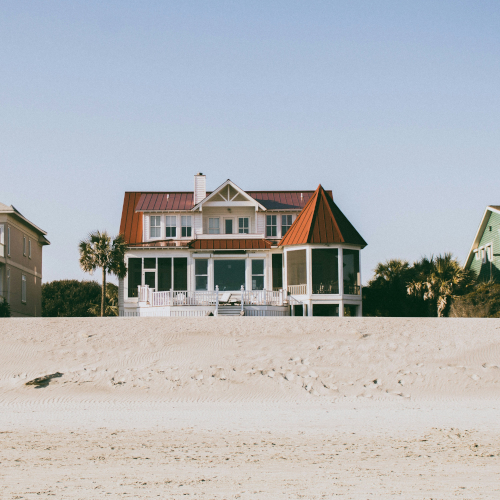
Vacation Rental
Kitchen + outdoor space. Kids under 12? Consider all-inclusive instead.
CITY BREAK (3–5 days)

Hotel
Location and convenience beat space. Book a suite or interconnecting rooms.
LONG HAUL (7–14 days)

Vacation Rental
Kitchen saves money. Laundry access changes the packing math entirely.
Sun + sand with under-12s
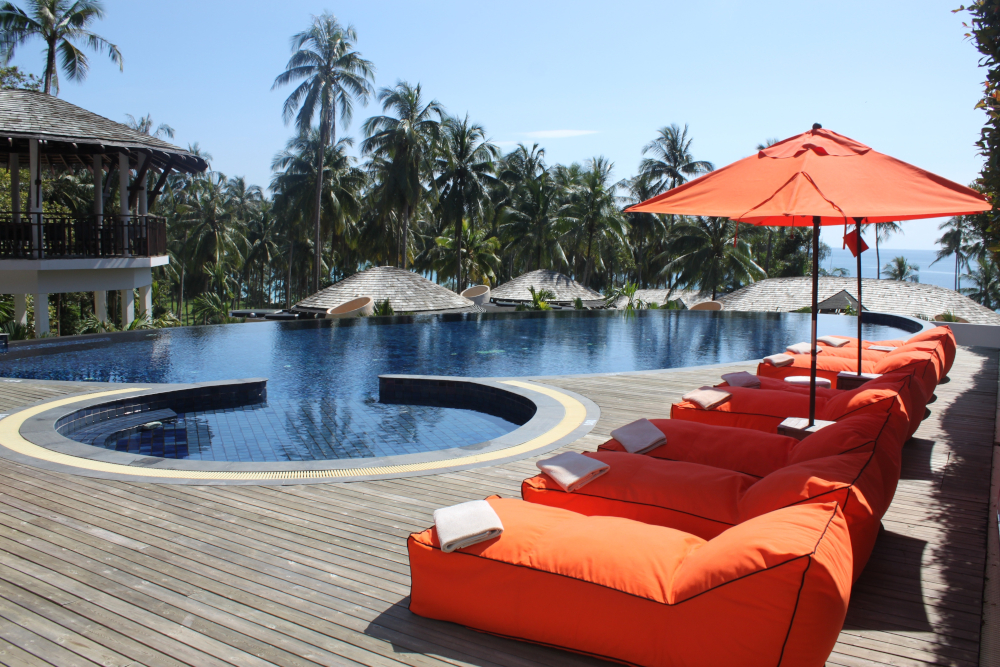
All-Inclusive
Financial predictability + kids club = real downtime for adults.
MULTIGENERATIONAL TRIP
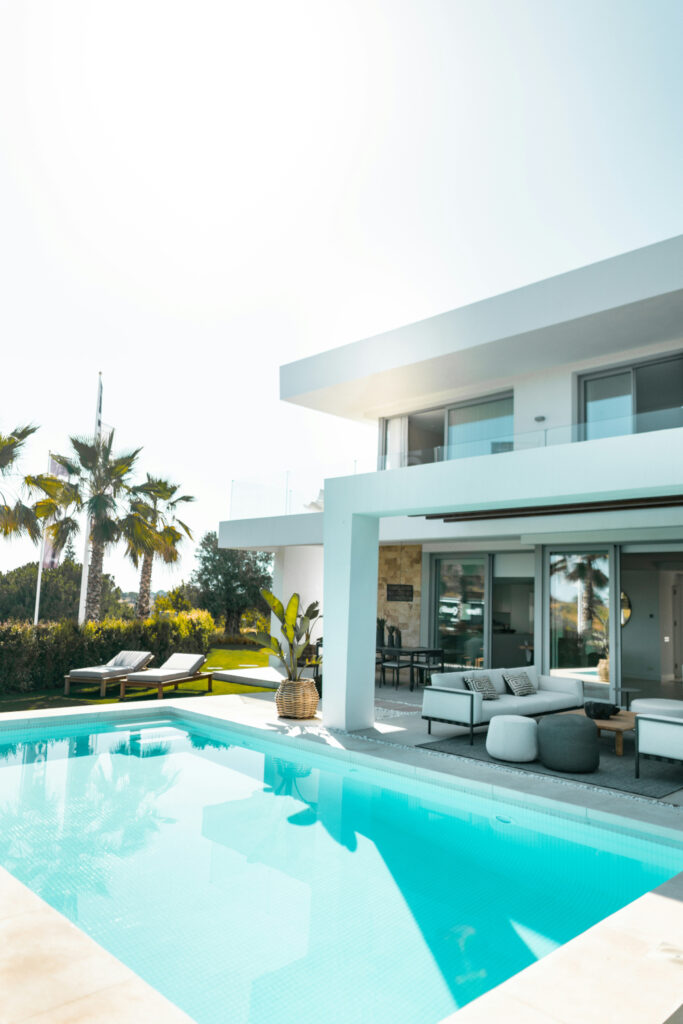
Villa / Large Rental
Communal living space with private bedrooms for each family unit.
SKI / MOUNTAIN

Catered Chalet
Ski-in ski-out access is critical with small children in boot gear.
2
JAN
Types of Family-Friendly Accommodation: Complete Breakdown
Hotel Rooms and Family Suites
The classic option. Hotels offer consistency, daily housekeeping (which matters more than you think when you’re traveling with small children), on-site amenities, and someone at the front desk who can answer questions and solve problems. The best family hotels offer interconnecting rooms, suites with separate living areas, cribs and high chairs on request, and pools designed with children in mind rather than adults who want to forget children exist.
The weakness: standard hotel rooms were not designed for families. A room with a king bed and no other furniture does not work for two adults and two children. If you are booking a hotel, you need to specifically look for family rooms, suite configurations, or connecting room options.
Best for: City trips, short stays, destinations where you will be out most of the day, families with children old enough to manage one shared space.
Vacation Rentals
Apartments, houses, cottages, villas, and cabins rented through Airbnb, Vrbo, or local agencies. The kitchen is the game-changer. Being able to make breakfast, store snacks, heat up dinner, and not spend $85 every time a child needs food dramatically changes the experience and the budget.
Space is the other advantage. A three-bedroom house gives everyone room to breathe, separate bedtime zones for children and adults, and the kind of domestic rhythm that makes multi-week trips genuinely sustainable.
The weakness: no daily housekeeping, no front desk, quality varies wildly between listings, and a kitchen also means cooking on holiday. The solution to the last problem is committing to some meals out and treating the kitchen as supplementary rather than primary.
Best for: Trips of a week or longer, beach destinations, family groups with multiple children, families with babies who need a dedicated sleep space, multigenerational trips.
All-Inclusive Resorts
Everything included in one price: accommodation, meals, drinks, activities, kids clubs, and often entertainment. For families with young children who eat a lot, need constant snacking, and have unpredictable schedules, the financial predictability is genuinely valuable. You stop doing math every time someone orders something.
The best all-inclusive resorts for families do far more than food and drink. They offer supervised kids clubs that children actually enjoy, age-specific programming, teen lounges separate from the little kids’ zone, family pools alongside adult pools, and staff trained specifically in working with children.
The weakness: you tend to stay on the resort because everything is already paid for, which can limit how much you see of the destination. Quality varies enormously between properties and price points.
Best for: Beach holidays with children under 12, families who want maximum relaxation with minimum decision-making, first-time family travelers who want predictability.
Glamping and Outdoor Accommodation
Treehouses, yurts, bell tents, safari-style tented camps, and luxury camping sites. A fast-growing category that resonates especially with families who want nature immersion without sacrificing comfort. Children who might resist a standard hotel are often thrilled by a treehouse or a canvas tent with a wood-burning stove.
Many glamping sites specifically target families, with dedicated children’s activity programs, fire pits, outdoor swimming, and enough space for children to run around freely.
Best for: Active families, older children and teenagers, domestic trips, families who want a nature experience without full wilderness camping.
Holiday Parks and Resort Villages
Particularly strong in Europe, Australia, and New Zealand. Center Parcs in the UK and Europe is the benchmark: self-contained villages with a mix of cabin accommodation and indoor subtropical swimming complexes, with activities, restaurants, and outdoor spaces all within walking distance. Holiday parks in Australia offer cabins, powered sites, jumping pillows, mini golf, and waterparks in a contained environment that children can navigate independently once old enough.
Best for: Multi-family trips, children of all ages, destinations where weather is unreliable, families who want a low-logistics, high-activity experience.
Home Exchanges
Swap your home for someone else’s home in a destination you want to visit. Platforms like Home Exchange and Love Home Swap facilitate this. You get a real home with full kitchen, living space, and often a garden, at zero accommodation cost. The swap partner handles it from their end simultaneously or via a points system.
The limitation is planning lead time. Most exchanges require 3 to 6 months of advance planning, and availability in peak family travel periods (summer school holidays, Christmas) is competitive. But for families who can plan ahead, it is one of the most cost-effective ways to travel.
Best for: Budget-conscious families, longer trips, families who have a desirable home location to offer in exchange.
Farm Stays and Rural Accommodation
Agritourism accommodation covers working farms that take guests, and it is consistently popular with young children. Collecting eggs, meeting animals, seeing food grown and prepared, being involved in genuine outdoor activity: these are experiences that engage children in a way that no resort can replicate. Available across France, Italy, the US, New Zealand, and increasingly worldwide through platforms like Agriturismo in Italy and Farm Stay UK.
Best for: Families with children aged 3 to 12, destinations with strong agritourism infrastructure, families prioritizing educational and experiential travel.
3
JAN
All-Inclusive Resorts: Who They're Actually For
All-inclusive is either the best decision you made or the one you immediately regret, depending almost entirely on whether you chose the right resort for your children’s ages.
When All-Inclusive Genuinely Works
For families with children under 12, a well-chosen all-inclusive eliminates the three biggest daily frustrations of family travel: where to eat, how much it will cost, and what the children will do while adults decompress. You land, the bags go to the room, and for the next seven to fourteen days the operational burden drops significantly.
The financial predictability matters. An all-inclusive at $300 per night sounds expensive until you calculate what three meals a day for four people plus drinks, snacks, and activities would cost elsewhere. For families where children eat a lot and snack constantly, the all-inclusive model frequently comes out ahead on pure cost.
What to Look for in a Family All-Inclusive
Kids clubs with genuine programming for different age groups, not just a room with a television. Separate pools for children and adults. Family rooms or suites rather than a standard double with a cot wedged in. Multiple dining options rather than a single buffet. Age-specific teen facilities so older children are not stuck with toddlers. Babysitting or evening childcare availability if you want adult dinners.
The best all-inclusive brands consistently recommended by family travel communities include Club Med (known for the most comprehensive activity programming), Beaches (specifically designed for families with children, Caribbean properties), Sandals’ sister brand Beaches, Nickelodeon Hotels and Resorts in Mexico and the Caribbean (character experiences that children love), and Azul Beach Resorts by Karisma.
For European all-inclusive, Mark Warner Resorts and Club Med in the Alps and Mediterranean are the most family-recommended.
When All-Inclusive Does Not Work
Teenagers who want independence and authenticity rather than resort programming. Families who travel primarily to experience the destination rather than the property. Trips where the whole point is exploring local food, culture, and neighborhoods. Families with very picky eaters who may struggle even with wide buffet options.
4
JAN
Vacation Rentals vs. Hotels: The Honest Comparison
This is the decision most families face on most trips. Here is the honest breakdown rather than the idealized version.
When Vacation Rentals Win
Trips longer than five days almost always favor a rental. The kitchen pays for itself in saved restaurant costs within the first two days. The laundry access means you pack less. The living room means children can watch something in the evening without you sitting in darkness because the bedroom is the only room. The extra bedrooms mean actual adult time after children’s bedtime rather than lying in the dark hoping not to wake anyone.
Rentals also tend to win on beach holidays where you will be at the property a significant portion of the day, on trips where cooking or local grocery shopping is part of the experience, and on trips with multiple families or extended family groups where a house creates communal space that a block of hotel rooms cannot replicate.
Airbnb and Vrbo are the dominant platforms. For higher quality, more vetted properties, try Oliver’s Travels, Plum Guide, or boutique local rental agencies specific to your destination.
When Hotels Win
City trips of three to five days where you will be out from morning to evening. Any trip where the convenience of housekeeping, a staffed restaurant, and a functional concierge outweighs the kitchen access. Trips where arrival is late and departure is early and you simply need somewhere reliable to sleep. First-time international trips where the predictability of a hotel chain matters.
The family travel community has a useful shorthand: beach trips go rental, city trips go hotel, resort destinations go all-inclusive. It is a generalization but it holds up across a significant range of trip types.
The Hybrid Approach
Many experienced family travelers use a combination: a hotel at the start of a trip for easy arrival, a rental in the middle for settled days in one location, and a hotel at the end for easy checkout before a flight. This works particularly well on multi-city or multi-destination trips where you are moving frequently.
5
JAN
What to Look for Before You Book: The Full Checklist
Most parents have learned this list the hard way. Here it is before you need to.
Space and Sleeping Configuration
Does the room actually fit your family? A standard double room is designed for two adults. If you are adding children, you need to verify exact sleeping arrangements before booking. Ask specifically: how many beds, what size, and whether a cot or rollaway is an additional charge. Many hotels charge $30 to $50 per night for an extra cot, which adds up over a week.
For rentals, read the sleeping configuration in the listing details rather than the headline. “Sleeps 6” sometimes means two adults in a bed, two children on a sofa bed, and two more on air mattresses. That is technically six but not functionally comfortable.
Connecting Rooms
One of the most overlooked booking criteria. Connecting rooms give each family unit privacy while maintaining access between rooms. This is particularly valuable for families with young children who go to bed before adults, for multigenerational trips, or simply for any family where the children’s bedtime and the adults’ evening do not coincide.
Many hotels list connecting rooms as an option but cannot guarantee them. If this is essential, call the hotel directly and ask to have connecting rooms noted on the reservation, then confirm again a few days before arrival.
Cribs, High Chairs, and Baby Equipment
If you are traveling with a baby or young toddler, verify availability before booking rather than assuming. Most hotels can provide a crib (called a cot in the UK and Australia) but availability is limited. Request one at booking and confirm on arrival. Some hotels charge for this.
High chairs in the restaurant: call ahead if you have a baby who needs one at every meal. Not all hotel restaurants have more than one or two.
Pool
For families with children, pool access is not a luxury, it is a necessity for managing afternoon energy levels. Verify that the pool exists and is open during your travel dates. Some hotel pools close in winter even in warm climates. Some are heated, some are not. Some have pool gates and depth zones appropriate for children; some are deep-end only.
For very young children, look specifically for a splash pad or shallow wading area. A 1.5 metre pool with no shallow section does not work for a two-year-old.
Location Relative to Your Actual Plans
A beach resort twenty kilometers from the beach requires daily transport. A city hotel that sounds central might sit on a noisy intersection with no safe outdoor space for children. A vacation rental in a charming village might not have a supermarket within walking distance when you need to buy milk at 7am for a hungry toddler.
Look at the property pin on Google Maps, not just the listing description. Use Street View to see what is actually around it. Check walking distance to the nearest playground, supermarket, beach access, or wherever you plan to spend your time.
Kitchen Access and Cooking Facilities
If you book a rental expecting a fully equipped kitchen, read the listing carefully. “Kitchenette” usually means a microwave, a small bar fridge, and a kettle. “Full kitchen” should mean a stove, oven, full-size fridge, and basic utensils, but this varies. Check reviews specifically for mentions of kitchen equipment.
For hotels, check whether breakfast is included and what that breakfast looks like. A full buffet is a meaningful amenity for families. Continental means pastries and coffee, which does not feed a hungry child through a morning of activity.
Laundry Access
For trips longer than a week, laundry access changes the packing math entirely. Many rentals include a washing machine. Some hotels have guest laundry facilities or offer laundry service at a per-item or per-bag cost. On a two-week trip with young children who change clothes multiple times a day, laundry access is genuinely important.
Noise Levels
Children go to bed early. Rooms above a rooftop bar, adjacent to a nightclub, or facing a main road with late-night traffic are problematic. Read reviews for noise mentions. For hotels, request an upper floor room away from the elevator (foot traffic noise) and away from the pool bar. For rentals, check whether the property is in a residential neighborhood or near entertainment venues.
6
JAN
Room Configuration by Family Size
Families of 3 (2 adults + 1 child)
A standard double or queen room is workable for a child in a cot. Once your child is toddler age and sleeping in their own bed, a family room or junior suite with a sofa bed gives everyone more space and preserves adult time after bedtime. A rental studio with a proper separate sleeping area is often a better value pick than a hotel family room at the same price point.
Families of 4 (2 adults + 2 children)
Standard rooms stop working. You need either interconnecting rooms (two doubles linked by a door), a family suite with a separate sleeping area for children, or a 2-bedroom vacation rental. The interconnecting room model works best when children have an early bedtime and you want adult time without lying in the dark.
Families of 5+ or Multigenerational Groups
Hotel rooms scale poorly. A villa, holiday house, or large rental property is almost always the better solution. Companies like Oliver’s Travels, James Villas, and Vintage Travel specialize in large-group family properties with private pools and full catering setups.
Tip: Interconnecting Rooms
Many hotels list connecting rooms as an option but cannot guarantee them until arrival. If they are essential, call the hotel after online booking, explain why you need them, and ask to have it noted on the reservation with the name of whoever you spoke to. Then confirm again 48 hours before arrival.
7
JAN
Kids Clubs and Childcare: What to Know
A good kids club on a family resort is one of the most genuinely useful amenities in travel. One to three hours of supervised, genuinely engaging programming mid-afternoon gives parents downtime while children are doing something they actually enjoy rather than watching screens in a hotel room.
What a Good Kids Club Looks Like
Age-separated programming
Look for at least three groups: toddlers (3–5), younger children (6–9), and older children (10–12). A club that lumps a 3-year-old and an 11-year-old together serves neither well.
Outdoor activity alongside indoor
Arts and crafts only gets boring fast. Look for pool time, beach activities, nature programs, or sports in the rotation.
Drop-off vs. participation model
If you want genuine adult time, verify the club operates as true drop-off. Some require parent participation, which defeats the purpose.
Staff ratios
One staff member per eight children is a reasonable benchmark for younger age groups.
Brands Known for Strong Family Programming
Club Med is the most consistently recommended for breadth of activity programming and the quality of its teen facilities. Beaches Resorts (Caribbean) is purpose-built for families with young children. Nickelodeon Hotels and Resorts in Mexico deliver character-driven experiences that younger children love. For Europe, Mark Warner properties are strongly rated by British family travel communities for their skiing and beach resort programs.
Evening Childcare and Babysitting
For families who want adult dinners and evenings, in-room babysitting is the relevant amenity rather than the daytime kids club. Most large resorts can arrange this through the concierge at an additional cost, typically $25 to $50 per hour for a hotel-vetted sitter. Book this in advance rather than requesting it on the night.
Some resorts offer evening kids clubs where children can be dropped for a supervised dinner and activity while parents eat separately. Club Med is particularly known for this. It is one of the most genuinely useful family amenities available and worth specifically seeking out if evening adult time matters to you.
8
JAN
Accommodation by Age Group
Traveling with Babies (0 to 12 months)
Priorities: proximity to everything (you cannot walk far with an infant and a stroller), cot availability confirmed in writing, blackout blinds for nap time, a safe space to set the baby down while you unpack or shower, and a refrigerator for milk storage.
Apartment rentals work exceptionally well at this age because the domestic routine can continue relatively undisturbed. Hotels work if you specifically book a room with a confirmed crib, request a refrigerator, and choose a property where the pool is not the main amenity since a baby’s pool time is brief and requires significant equipment.
Avoid: properties where stairs are unavoidable with a stroller, accommodations with exclusively late-night restaurant service, resorts designed around evening entertainment.
Traveling with Toddlers (1 to 3 years)
Priorities: outdoor space or pool at the property, blackout capability for nap and bedtime, kitchen or kitchenette for familiar foods and snacks, room to move around without concern, proximity to where you are going.
Toddlers travel best in contained environments. A beach house or resort where the child’s world is defined and manageable beats a city hotel where every outing requires negotiating busy streets and public transport with a stroller and a tantrum-prone human.
Vacation rentals with enclosed gardens or direct pool access are the most consistently successful choice for this age group.
Traveling with Young Children (4 to 8 years)
This is the age range all-inclusive resorts are most designed for, and where they most consistently deliver value. Children are old enough to participate in kids club programming, young enough to be thrilled by resort amenities, and at an age where the combination of pool, beach, and structured activities keeps everyone genuinely happy.
For non-resort travel, hotels with significant pool facilities and proximity to family attractions work well. Rental properties near beaches or with private pools are excellent for this age.
Traveling with Preteens and Teenagers (9 to 17 years)
The needs shift toward independence, choice, and social opportunity. Teen lounges and teen-specific programming at resorts matter. City travel with cultural experiences becomes genuinely engaging rather than something to be endured. National parks, active adventures, and destinations with genuine things to do outside the resort become increasingly important.
The best accommodation for this age group is either a well-located city base (hotel or rental near the action) or a resort with enough facilities and teen-specific programming that older children are not bored by 11am. Older teenagers can be genuinely enthusiastic about holiday houses with space to spread out, good WiFi, and some autonomy within the family trip.
9
JAN
Budget Breakdown: What Family Accommodation Actually Costs
Budget Family Accommodation (per night, family of four)
Type | Cost range | What to expect |
|---|---|---|
Budget hotel, family room | $60 – $120 | One room, limited amenities, often no pool, sometimes breakfast included |
Hostel with private family room | $50 – $90 | Shared bathrooms common, social atmosphere, varies widely |
Budget vacation rental | $80 – $150 | Apartment or small house, basic furnishings, full kitchen |
Holiday park cabin | $70 – $130 | Shared park facilities, pool access, outdoor activities |
Budget all-inclusive | $200 – $350 | Food and drinks included, typically older properties |
Mid-Range Family Accommodation (per night, family of four)
Type | Cost range | What to expect |
|---|---|---|
Mid-range hotel, family suite | $150 – $280 | Separate sleeping areas, pool, breakfast often included |
Vacation rental, 2 bed | $130 – $250 | Comfortable apartment or house, full kitchen, laundry |
Mid-range all-inclusive | $350 – $600 | Good dining variety, kids club, beach or pool access |
Glamping | $150 – $300 | Luxury tents or cabins, activity programming, outdoor focus |
Premium Family Accommodation (per night, family of four)
Type | Cost range | What to expect |
|---|---|---|
Luxury hotel, interconnecting rooms | $350 – $700+ | Full service, concierge, premium pool, kids club |
Villa or large rental house | $300 – $800+ | Multiple bedrooms, private pool, full staff in some cases |
Premium all-inclusive resort | $600 – $1,500+ | Comprehensive programming, multiple dining, premium service |
Safari lodge or unique property | $400 – $2,000+ | Exclusive experiences, specialist family programs |
Where Most Families Actually Spend
The majority of family travelers land in the mid-range band for accommodation, typically representing 30 to 40 percent of total trip budget. On a two-week trip for a family of four, accommodation costs of $3,000 to $5,000 are realistic for mid-range choices in Europe or North America, and $2,000 to $3,500 for Southeast Asia or parts of Latin America.
For a step-by-step approach to budgeting your full trip, see: How to Create a Realistic Travel Budget.10
JAN
Best Booking Platforms for Family Travel

Booking.com is the most comprehensive for family-specific filters. You can filter by family rooms, cots available, kids club, and pool. The review system allows you to filter by family reviewers specifically, which gives more relevant feedback than overall scores.

Beaches.com for the Caribbean, specifically if you want the most family-designed all-inclusive resort brand available. Direct booking is often the best rate.

Club Med for Europe and wider international all-inclusive. The family programming is the most comprehensive of any major brand and the teen facilities are genuinely good.

Hotels.com is strong for reward accumulation if you travel frequently. Every ten nights earns one free night, which adds up meaningfully for families who travel multiple times a year.

Airbnb is the largest platform and offers the most inventory. Use the family-specific filters to find properties with cribs, high chairs, and pool access. Read reviews carefully and specifically look for reviews from families with similar-aged children.

Holiday Pirates surfaces genuine deals including package offers and flash sales. Useful for families with flexible dates and destinations.

For comparison shopping across all-inclusive properties, TripAdvisor remains useful for filtering by family reviews and seeing honest assessments of kids clubs and family amenities from parents who have actually visited.

Google Hotels is useful for comparison shopping across platforms and for seeing price trends over time.

Vrbo focuses exclusively on whole-property rentals rather than rooms within a host’s home. For families, this is often a better fit than Airbnb listings where you might share spaces with the host. Vrbo properties tend to skew larger and more purpose-built for group stays.

Plum Guide is a curated rental platform that accepts only properties that pass a 150-point inspection. More expensive than standard Airbnb listings but significantly more consistent in quality. Worth it for longer trips where accommodation quality directly affects the trip.
11
JAN
How to Book: Insider Tips That Save Time and Money
Book Accommodation Before Flights in Family-Specific Peak Periods
School holiday periods (summer in the Northern Hemisphere, Christmas, Easter, and half-term breaks in the UK) create accommodation scarcity first, then flight price spikes. Families who book accommodation before locking in flights for Christmas and summer have significantly more choice at better prices.
Call the Hotel After Booking Online
Online booking systems rarely capture nuance. After making a reservation, call the hotel directly and explain your family’s specific needs: cot required, connecting rooms preferred, high chair for restaurant, blackout blinds essential. Note the name of whoever you speak to. This conversation costs nothing and frequently results in better room assignments on arrival.
Read Family-Specific Reviews, Not Overall Scores
A hotel with an 8.2 average score might rank completely differently among family reviewers. Booking.com and TripAdvisor both allow you to filter reviews by traveler type. Read ten recent family reviews before booking anything over $200 per night.
Check What "Sleeps Four" Actually Means
Contact the property to confirm sleeping arrangement details before booking vacation rentals. The listing description and the reality can diverge significantly. Specifically ask: number of bedrooms, bed sizes, whether there is a sofa bed and its quality, cot availability, and whether the kitchen is fully equipped.
Book Cancellable Rates When Possible and Lock in the Price
Hotel prices fluctuate significantly between booking and travel. Book a cancellable rate, then monitor the price on Google Hotels or Booking.com as your travel date approaches. If the price drops, cancel and rebook at the lower rate. The small inconvenience of this process frequently saves 15 to 30 percent.
For All-Inclusive Resorts, Book Direct or Through a Specialist
All-inclusive pricing is often genuinely better when booked directly with the resort, particularly for promotions like kids eat free, kids stay free, or complimentary activity packages. Alternatively, use a family travel specialist agent who has negotiated rates and genuine knowledge of which properties deliver on family promises.
Ask About Kids Eat Free and Similar Promotions
A significant number of hotel restaurants and all-inclusive properties offer meals free for children under 12 with paying adults. This is rarely advertised prominently but always worth asking about before you finalize dining plans.
Factor in Resort Fees
Many US hotels add resort fees of $30 to $60 per night that are not included in the headline rate. These are non-negotiable and frequently cover pool access, WiFi, and parking, things you assumed were included. Verify total cost including all fees before comparing properties.
12
JAN
Accommodation by Destination Type
Beach Destinations
Vacation rental wins almost every time, particularly if you are staying more than five nights. A house or apartment near the beach with outdoor space, a barbecue, and a kitchen means easy mornings, flexible mealtimes, and the ability to walk back for naps without abandoning an expensive afternoon program. For premium beach experiences, an all-inclusive or boutique resort with direct beach access is the alternative, but book one where the beach access is direct rather than a shuttle ride away.
What to look for: outdoor shower for rinsing sandy children, secure storage for beach equipment, proximity to the beach on foot rather than by car, pool as a backup for days when the ocean is rough.
City Breaks
Hotel is usually the right call for city trips of three to five days. Location matters more than space in a city context. A well-located hotel in a walkable neighborhood beats a spacious rental in an inconvenient location for a short trip where you will be out most of the day.
What to look for: location within walking distance of the main areas you plan to visit, breakfast included to simplify the morning logistics, proximity to a park or outdoor space for children who need to run around, a hotel restaurant or room service for evenings when children are tired before adults are ready to stop.
Ski and Mountain Destinations
Ski chalets and ski apartment rentals are the standard for family ski trips in Europe. The catered chalet model, where a resident chef provides breakfast and dinner, is popular precisely because it removes meal logistics while providing the space of a rental property. In North America and Australia, ski resort accommodation ranges from on-mountain condos to hotel rooms. Ski-in ski-out access matters enormously with young children who cannot walk any distance in ski boots.
What to look for: ski-in ski-out or very short walk to the lifts, boot room or equipment storage, communal boot dryers, ski school pickup arrangements, and properties that can accommodate early children’s bedtimes without disrupting adult evenings.
National Parks and Nature Destinations
Campgrounds and glamping sites, national park lodges, and ranch accommodations are the relevant category. Inside-the-park accommodation books out months or years in advance for popular parks like Yellowstone, the Grand Canyon, and Yosemite. Book as early as possible and check cancellation policies carefully. The park lodge experience justifies the premium for many families because it eliminates the daily drive in and out.
Outside the park, vacation rentals in nearby towns offer full kitchens and more space at lower cost. The trade-off is driving time into the park each day and potentially paying for parking.
All-Inclusive Resort Destinations
Mexico and the Caribbean are the dominant all-inclusive market. Riviera Maya, Punta Cana, and Jamaica have concentrations of large family all-inclusive properties. When choosing between them, prioritize properties with good kids clubs over those with the most impressive pool complexes. A waterslide impresses for three hours; a genuinely good kids club delivers value across a full week.
Research each property specifically rather than relying on brand reputation alone. The same brand can operate properties that vary significantly in quality and family-friendliness. TripAdvisor reviews from families in the last six months are the most reliable signal.
13
JAN
Red Flags: What to Avoid
Listings with No Family Reviews
If a vacation rental or hotel has hundreds of reviews but none from families with children, ask why. Properties with no family track record present more uncertainty.
What to look for: outdoor shower for rinsing sandy children, secure storage for beach equipment, proximity to the beach on foot rather than by car, pool as a backup for days when the ocean is rough.
"Family Friendly" as the Only Indicator
Any property can claim to be family friendly. The phrase means nothing without specifics. Look for concrete details: cribs available, playground on site, kids menu, pool with shallow end, babysitting available. Vague descriptions frequently indicate properties that are technically not anti-family but have made no specific provision for children.
No Outdoor Space in a Property Where Children Will Spend Significant Time
This matters most on trips of five days or more. If the only outdoor area is a shared rooftop accessed by a key, you will feel this limitation acutely by day three.
Pools with No Shallow Section
Verify pool depth before arrival if you are traveling with toddlers or non-swimmers. Many boutique hotels have single-depth pools of 1.2 metres or deeper with no wading zone. This makes pool time stressful rather than relaxing.
Rentals Where "Fully Equipped Kitchen" is Contradicted by Photos
If the listing says fully equipped kitchen and the kitchen photo shows a two-burner hob and no oven, the listing is misleading. Contact the host before booking and ask specifically what equipment is available.
Location Marketed as "Convenient" With No Specifics
“Conveniently located” frequently means a 25-minute drive from everything rather than walking distance. Use the map and Street View before booking to verify what is actually nearby.
Hotels Where Connecting Rooms are "Subject to Availability
If connecting rooms are essential for your family configuration, a hotel that can only offer them subject to availability is not a reliable option. Either book a suite, pay the premium for a confirmed connecting room, or choose a vacation rental where the room configuration is fixed.
14
JAN
Essential Family Travel Products
These are the products that make accommodation logistics dramatically easier regardless of where you stay.
Sleep
Guava Lotus Travel Crib
The best portable crib for travel. Packs down small, sets up in under a minute, and meets all safety standards. Works in any room configuration — hotel room corner, vacation rental bedroom, anywhere.
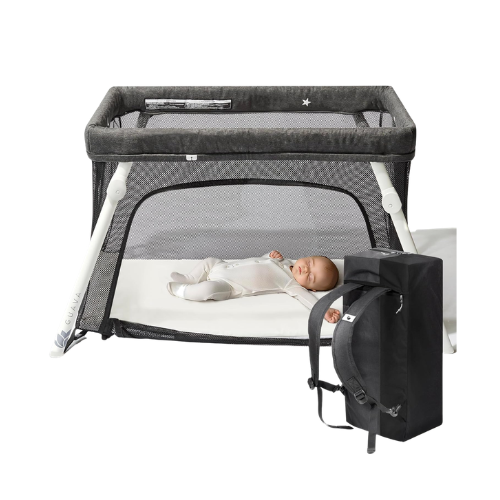
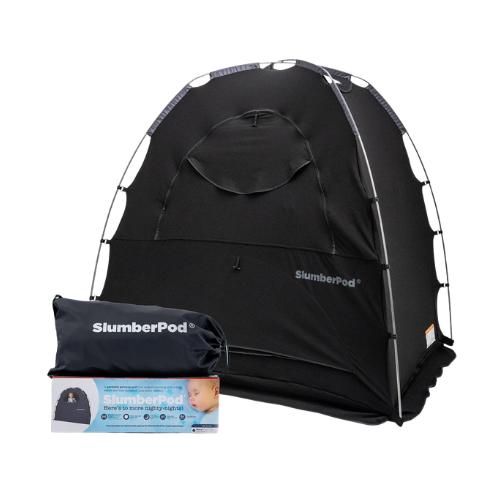
A blackout canopy that fits over a travel crib or pack-n-play to create a dark sleep space anywhere. Game-changing for nap schedules in bright hotel rooms or open-plan rentals.
Safety
Apple AirTag + Wristband


Apple AirTags are one of the most useful travel gadgets for families, especially when juggling suitcases, backpacks, strollers, and kids all at once. Slipped into luggage, attached to a diaper bag, or tucked into a child’s backpack, they let you quickly track missing items through the Find My network instead of panicking in an airport or hotel lobby.
Additionally, many parents use adjustable AirTag wristbands like these for younger kids during travel, giving them a comfortable way to wear an AirTag securely at airports, theme parks, busy city centres, or other crowded destinations where it’s easy to get separated for a moment.
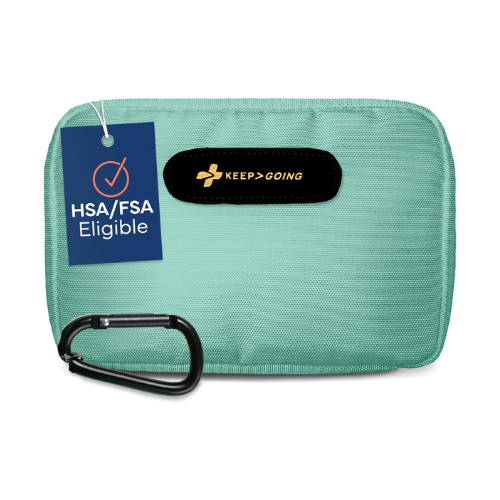
KeepGoing Travel First Aid Kit
From scraped knees at the airport to headaches, blisters, or unexpected travel mishaps, having a well-organized kit like this can save you from scrambling to find a pharmacy in the middle of a trip.
Organization
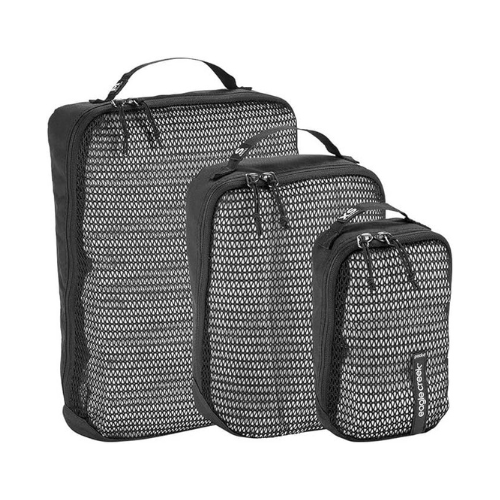
Packing cubes per person or per category make unpacking into a rental or hotel room fast and keep everyone’s belongings organized across the trip. Family travel favorite.
Comfort
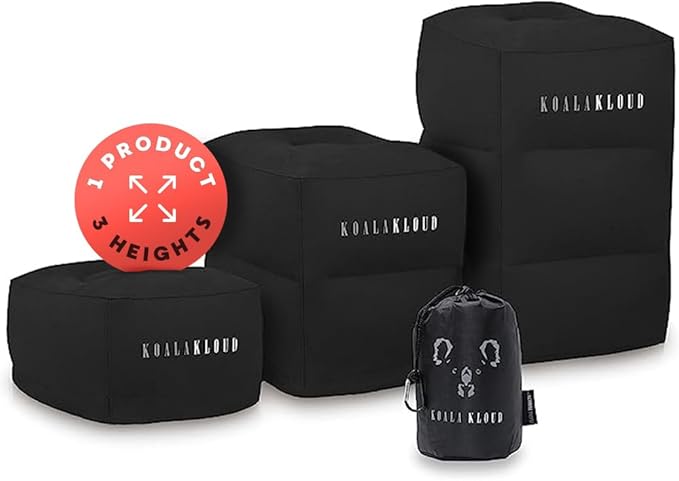
Koala Kloud Kids Airplane Footrest
Inflates to fill the footwell space on long-haul flights, creating a flat sleeping surface for children. Essential for the journey to the destination, not just the accommodation itself.
RELATED GUIDE
Need a full gear breakdown? See: The Ultimate Family Travel Gear Guide: Everything You Need to Travel with Young Kids
15
JAN
FAQs
What is the most family-friendly type of accommodation?
It depends almost entirely on the trip type and the children’s ages. Vacation rentals win for beach and longer trips. Hotels win for city breaks. All-inclusive resorts win for beach holidays with children under 12 where meal logistics and entertainment matter most. Glamping and holiday parks win for families who prioritize outdoor and activity-based experiences.
How do I find accommodation with a kids club?
TripAdvisor and Booking.com both allow filtering by kids club as a specific amenity. For all-inclusive properties, Club Med, Beaches, Mark Warner, and Nickelodeon Hotels and Resorts are the brands most consistently recognized for comprehensive kids club programming. Always verify the age range covered and the drop-off versus participation model before booking.
Do children need their own hotel room?
In most countries, no. Children sharing a room with parents is standard practice for family travel. Some hotels limit the number of guests per room for fire safety reasons, typically four, so families of five or more may need to confirm arrangements in advance. For families with older children who need privacy, interconnecting rooms are the practical solution.
What is the best booking platform for family accommodation?
Booking.com for hotels because of the family-specific filters and review sorting. Vrbo for vacation rentals because the whole-property model is more family-appropriate than Airbnb’s mixed home-sharing model. Direct booking through the resort’s own website for all-inclusive properties, where direct booking often accesses better rates and promotions.
How far in advance should I book family accommodation?
For school holiday periods: three to six months minimum for popular destinations. Peak summer and Christmas periods at well-reviewed family resorts and rental properties often book out within days of the prior year’s equivalent period becoming available. For shoulder season travel, six to eight weeks is usually sufficient. For national park lodges at major parks, check availability twelve months ahead.
Is all-inclusive worth it for families?
For families with children under 12 at beach resort destinations, yes, frequently. The financial predictability, the reduced daily decision-making, and the built-in kids entertainment deliver real value. For families with teenagers, the calculus is less clear. For families who primarily want cultural immersion rather than resort experience, all-inclusive is usually the wrong choice regardless of price.
How do I ensure a vacation rental is safe for young children?
Read listing descriptions for safety mentions: pool fencing, stair gates, window locks, and carbon monoxide detectors. Message the host directly with your children’s ages and ask what safety provisions are in place. Check photos carefully for open staircases, unfenced pools, and potential hazards. Look at reviews from other families with young children.
Can I negotiate with accommodation providers as a family?
More often than people realize. For longer stays at vacation rentals, most hosts will negotiate on price, particularly for stays of two weeks or more in shoulder season. For hotels, requesting free room upgrades, connecting rooms, or additional cribs is a reasonable ask when done politely at check-in. All-inclusive resorts frequently have unadvertised promotions for families (kids eat free, room category upgrades) that are accessible through direct booking calls rather than online searches.
15
JAN
Final Thoughts
The best family accommodation is not the most expensive option. It is the one that fits your specific family’s rhythm: how much space you actually need, what your children require to sleep well in a new place, how many hours a day you will actually be at the property, and what will make you as a parent feel like this is a holiday rather than a project.
That answer changes as children get older, as trips get longer, and as your family’s travel confidence builds. The families who are happiest on the road are not the ones who spend the most on accommodation. They are the ones who made the right choice for where they were at that particular time.
Research it the way it deserves to be researched. Read the family-specific reviews. Look at the map. Ask the questions the listing did not answer. And then book it and stop second-guessing.
What has been the best family accommodation you have stayed in? Drop it in the comments below.
Ready to Start Planning?
Planning your trip from scratch? Start with our step-by-step guide: How to Plan an International Trip Step-by-Step
Need to nail your budget before you book anything? How to Create a Realistic Travel Budget