
The Ultimate Guide to Booking Affordable Airfare Anywhere in the World
Before you can consistently find cheap flights, it helps to understand why airfare seems to change so dramatically from one search to the next. Airline ticket pricing isn’t random, and it certainly isn’t one-size-fits-all. Behind every fare is a complex system of algorithms, demand forecasting, fare classes, and real-time market data designed to help airlines fill seats while maximizing revenue. The good news for travelers is that once you understand what drives flight prices up and down, you can stop guessing, start searching smarter, and dramatically improve your chances of finding affordable airfare anywhere in the world.
Table of Contents
1
JAN
Why Flight Prices Vary So Much
Airline Pricing Is Constantly Changing
If you’ve ever searched for a flight in the morning, checked again that evening, and found the price had jumped by hundreds of dollars, you’re definitely not imagining things. Airline ticket prices are incredibly dynamic, changing constantly based on a wide range of factors happening behind the scenes. Unlike many products that have a fixed retail price, airfare is controlled by sophisticated pricing systems that continuously analyze demand, seat availability, competitor pricing, and booking patterns in real time.
Modern airlines use advanced revenue management software designed to maximize profit on every single flight. These systems can adjust fares multiple times in a day depending on how quickly seats are selling, how close the departure date is, and whether competing airlines have lowered or raised their own prices. This is why a flight you looked at yesterday may cost significantly more—or occasionally less—when you search again today.
Supply and Demand Drive Airfare
At its core, airline pricing follows one of the oldest principles in business: supply and demand. When more people want to travel on a particular route or during a specific time of year, prices naturally rise. School holidays, long weekends, Christmas, summer vacation, and major international events can all cause demand to spike, often pushing ticket prices significantly higher than normal.
On the other hand, flights during quieter travel periods can offer exceptional value for flexible travelers. Flying during shoulder seasons, midweek departures, overnight flights, or less popular months often results in lower fares because airlines need to fill empty seats. Understanding these demand cycles is one of the simplest ways travelers can save hundreds of dollars on international airfare.
Not Every Economy Seat Costs the Same
One of the biggest surprises for many travelers is learning that passengers sitting side by side on the exact same flight may have paid completely different prices for their tickets. Even within economy class, airlines divide seats into multiple fare categories, often called fare classes or fare buckets, each with its own pricing, rules, and restrictions.
The cheapest fare classes usually sell first and often come with limitations such as no checked baggage, no seat selection, or limited cancellation options. As those lower-priced seats sell out, the airline automatically opens the next pricing tier, which may cost significantly more. To travelers, it can feel like prices suddenly increased overnight, when in reality the cheapest inventory simply disappeared.
Timing Can Make a Huge Difference
When you book can be just as important as where you fly. Many travelers assume booking as early as possible always guarantees the best deal, but airline pricing is far more complex than that. Prices can rise or fall months before departure depending on how quickly seats are selling, seasonal demand, and how airlines forecast future bookings.
For some routes, booking several months in advance can secure excellent value, while other flights may drop in price temporarily if demand is slower than expected. Airlines constantly monitor booking trends and adjust fares accordingly, rewarding travelers who track prices, stay flexible, and know when to book. Learning how timing affects airfare is one of the most powerful tools for finding cheaper flights anywhere in the world.
2
JAN
Understand How Airline Pricing Works
Finding cheap flights starts with understanding what’s actually happening behind the scenes every time you search for airfare. Airline ticket prices are not fixed, and they’re rarely based on distance alone. Instead, airlines use sophisticated pricing systems designed to sell every seat for the highest possible price while still ensuring the aircraft departs as full as possible. Everything from the time of year and route popularity to how many seats have already sold can influence what you see on your screen. Once you understand the basics of airline pricing, it becomes much easier to recognize a genuine deal and avoid overpaying for the exact same flight.
Airlines Use Dynamic Pricing
Unlike traditional products with a set retail price, airline tickets are priced using dynamic pricing models. This means fares are constantly being adjusted based on real-time market conditions. Every time someone books a seat, cancels a reservation, or searches a competing route, airline systems are gathering data and recalculating what customers may be willing to pay. Prices can change several times in a single day, and in some cases, multiple times within an hour.
These pricing systems are built around revenue management, a strategy designed to maximize profit on every flight. Airlines analyze historical booking trends, seasonal demand, route performance, competitor pricing, and how close the departure date is. If a flight is selling faster than expected, fares may rise quickly. If sales are slower, airlines may temporarily lower prices to stimulate demand and fill empty seats.
Flights Are Sold in Fare Classes
One of the biggest reasons airfare seems unpredictable is because not every seat is sold at the same price, even within the same cabin. Airlines divide seats into fare classes, often called fare buckets, with each bucket containing a limited number of seats at a specific price point. Once the cheapest fare class sells out, the system automatically moves to the next pricing tier.
This is why two passengers sitting side by side may have paid dramatically different prices for the exact same flight. One traveler may have secured an early promotional fare, while another booked after those seats were gone and paid a higher fare class. Even within economy, some tickets include baggage, seat selection, and flexibility, while others come with strict restrictions. Understanding fare classes helps explain why prices can appear to jump overnight.
Airlines Predict Traveler Behaviour
Airlines don’t just sell seats—they predict who is most likely to buy them and when. Their pricing systems are built around customer behavior, analyzing how different types of travelers typically book. Business travelers often book at the last minute and are generally less sensitive to price, while vacation travelers usually plan further ahead and spend more time searching for deals.
Because of this, airlines may intentionally keep some seats unsold until closer to departure, expecting higher-paying travelers to book later. If those bookings don’t happen, prices may occasionally drop to fill remaining inventory. This balancing act allows airlines to maximize revenue while keeping load factors high, and it creates opportunities for travelers who understand how these patterns work.
Competition Influences Ticket Prices
Airfare is heavily influenced by competition between airlines. Routes served by multiple carriers often have lower prices because airlines constantly monitor each other’s fares and adjust accordingly. Popular routes between major international hubs can see aggressive pricing as airlines compete for market share and customer loyalty.
On routes with limited competition—especially remote destinations, island nations, or smaller regional airports—prices tend to remain higher because travelers have fewer alternatives. Budget airlines can also create downward pressure on prices by forcing larger carriers to match or respond with promotional fares. Comparing multiple airports, nearby cities, and alternate routes can often reveal much better pricing simply because of increased competition.
Timing Affects Every Fare
Airline pricing changes as departure approaches, but not always in predictable ways. Early in the booking cycle, airlines may release promotional fares to encourage initial sales and secure early revenue. As seats begin filling and demand becomes clearer, prices often rise—especially on popular routes or during peak travel seasons.
However, if a flight isn’t filling as expected, airlines may introduce temporary discounts to stimulate demand. This is why travelers sometimes see unexpected price drops weeks before departure. The best deals often come from understanding booking windows, monitoring routes over time, and recognizing when a fare is genuinely competitive rather than waiting too long and risking higher prices.
Taxes, Fees, and Airport Costs Matter
The base airfare is only one part of what makes up your final ticket price. Government taxes, airport improvement fees, security charges, fuel surcharges, and local tourism taxes can all significantly affect what you pay. Two flights of similar distance can have very different final prices simply because they depart from airports or countries with different fee structures.
Major international hubs like Toronto Pearson International Airport or London Heathrow Airport often come with higher passenger fees than smaller regional airports. In some cases, simply flying from a nearby alternate airport can reduce your overall cost substantially. Savvy travelers look beyond the base fare and consider the full ticket price before booking.
3
JAN
Be Flexible With Where You Go
One of the most powerful ways to find cheap flights is to stop searching for one exact destination and start searching for opportunities instead. Travelers who insist on flying to one specific city on one specific date often end up paying premium prices, especially during peak seasons or on popular routes. But those who stay flexible with where they go can unlock dramatically cheaper fares, unexpected destinations, and travel experiences they may never have originally considered.
Airlines price routes differently based on demand, competition, seasonality, and airport traffic, which means one destination may cost twice as much as another just a few hundred kilometers away. By widening your search and allowing the cheapest fares to guide your planning, you open the door to far more affordable adventures—and often discover places you might never have searched for otherwise.
Search “Everywhere” Instead of One Destination
Most travelers begin by searching for flights to one exact city, but some of the best deals appear when you reverse that process. Instead of deciding where to go first, try searching from your home airport to “Everywhere” or “Anywhere.” This allows flight search engines to scan hundreds of destinations and instantly show you where your money will go furthest.
Tools from Skyscanner, Google, and Kayak make this incredibly easy. You may discover that flights to Lisbon are half the price of Paris, or that a tropical escape to Cancún is cheaper than a domestic trip. Sometimes the best destination is simply the one offering the best fare.
Explore Nearby Cities and Alternate Gateways
Being flexible doesn’t mean abandoning your dream destination—it often means approaching it differently. Instead of flying directly into the most popular airport, look at nearby cities, regional hubs, or neighboring countries that may offer significantly lower fares. A short train ride, bus trip, or budget connection can sometimes save hundreds of dollars.
For example, travelers heading to Amsterdam may find cheaper flights into Brussels or Düsseldorf. Those planning a trip to Bangkok might discover lower fares into Kuala Lumpur or Singapore. Thinking regionally instead of city by city can completely change what’s possible within your budget.
Let Cheap Flights Inspire Your Itinerary
Some of the most memorable trips begin not with a destination, but with a deal. Flexible travelers often build their itineraries around unusually low fares rather than fixed plans, allowing them to visit places they may never have originally considered. This approach works especially well for long-term travelers, digital nomads, backpackers, and anyone with flexible vacation dates.
Maybe a discounted fare appears to Marrakesh instead of Rome, or perhaps a flash sale makes Tokyo suddenly more affordable than Sydney. When you let deals shape your travel plans, you often end up experiencing destinations that are just as incredible—at a fraction of the cost.
Search by Region Instead of Country
If your goal is to experience a certain part of the world rather than one exact place, searching by region can uncover better deals. Instead of searching only for one country, consider an entire region like Europe, Southeast Asia, South America, or Africa.
For example, if you want Mediterranean beaches, flights to Athens, Valencia, or Bari may all deliver a similar experience at very different price points. Searching broadly gives you more options, more flexibility, and often much better value.
Consider Shoulder-Season Destinations
Destination flexibility also means being open to places that are slightly outside peak travel demand. Some destinations become dramatically cheaper during shoulder seasons—those sweet spots just before or after the busiest tourist months—while still offering fantastic weather and fewer crowds.
For example, Santorini in May may be far cheaper than July, while Cape Town or Bali can offer excellent value outside holiday peaks. Travelers willing to shift not just where they go, but when and how they experience a destination, often find the biggest savings.
Use Flexible Destinations to Unlock Multi-City Trips
Once you stop focusing on one fixed destination, entirely new travel routes become possible. Sometimes the cheapest international ticket isn’t to your final destination at all—it’s to a major hub that opens the door to multiple countries, cities, or regions for the same overall budget.
A cheap flight into London could lead to budget flights across Europe, while landing in Panama City may open affordable routes across Central and South America. Flexible travelers often turn one cheap flight into an unforgettable multi-country adventure simply by staying open to where the best opportunities lead.
4
JAN
Be Flexible With Dates
When it comes to finding cheap flights, flexibility with your travel dates can be just as powerful as flexibility with your destination. Two flights on the exact same route, with the same airline and same seat class, can vary in price by hundreds—or even thousands—of dollars simply because of the day, week, or season you choose to travel. Travelers who lock themselves into specific dates often end up paying premium fares, while those willing to shift their departure by a few days can unlock some of the best deals available.
Airlines constantly adjust prices based on demand, booking patterns, holidays, school breaks, business travel trends, and seasonal tourism. A flight that looks expensive on a Friday may suddenly become far more affordable on a Tuesday. By learning how airfare changes throughout the week, month, and year, you can plan smarter, travel further, and stretch your budget much further than most travelers realize.
Search by Month Instead of Exact Dates
One of the easiest ways to uncover cheaper airfare is to stop searching for one exact departure date and start viewing an entire month at once. Most flight search tools now offer flexible calendar views that show the cheapest departure days across several weeks, making it easy to spot pricing patterns instantly.
Platforms like Google, Skyscanner, and Kayak allow travelers to compare fares across whole months instead of single days. You may discover that flying on the 8th instead of the 10th saves $300, or that leaving a week earlier cuts your airfare in half. A little date flexibility can create surprisingly large savings.
Midweek Flights Are Often Cheaper
Not all travel days are priced equally. In many cases, flights departing on Tuesdays, Wednesdays, and sometimes Saturdays tend to be cheaper than those leaving on Fridays or Sundays. This is largely because business travelers often fly at the start and end of the workweek, while leisure travelers prefer long-weekend departures.
By avoiding peak travel days, flexible travelers can often secure significantly lower fares on the exact same route. A family flying from Vancouver to Honolulu on a Wednesday may pay far less than someone leaving on a Friday evening. If your schedule allows, even shifting your trip by one or two days can make a major difference.
Avoid Holidays and School Breaks
Some of the most expensive flights of the year happen during public holidays, long weekends, school vacations, and major seasonal travel periods. Christmas, New Year’s, spring break, summer holidays, and major festivals often create huge spikes in demand, which airlines respond to by raising fares well in advance.
Traveling just before or after these peak periods can lead to dramatic savings. Instead of flying during the middle of July, for example, traveling in late June or early September may offer much better pricing while still providing excellent weather in destinations like Barcelona or Split. Flexible timing often means fewer crowds, better accommodation prices, and a more relaxed travel experience overall.
Shoulder Season Often Offers the Best Value
Shoulder season—the period between peak and off-season travel—can be one of the smartest times to fly. Demand is lower than during major holiday periods, but weather and local conditions are often still excellent, making it a sweet spot for budget-conscious travelers.
Destinations like Rome in May, Kyoto in November, or Cape Town in March often deliver beautiful conditions without peak-season airfare. Travelers who understand shoulder seasons can enjoy many of the same experiences while spending far less on both flights and accommodations.
Overnight and Less Popular Flight Times Can Save Money
Flight timing matters just as much as travel dates. Early morning departures, overnight red-eye flights, and flights with less convenient connection times are often priced lower because fewer travelers actively seek them out.
While a 6:00 a.m. departure or an overnight transatlantic flight may not sound glamorous, these flights can sometimes save hundreds of dollars. A red-eye from Toronto to Lisbon, for example, may cost significantly less than a daytime departure while also maximizing your arrival time. Flexible travelers often view inconvenient schedules as opportunities rather than obstacles.
Booking Windows Matter
Being flexible with dates also means understanding when to book. Airlines release fares months in advance, but the cheapest prices don’t always appear on day one. Instead, prices often fluctuate throughout the booking cycle as airlines monitor demand and adjust inventory.
For international flights, many travelers find the best deals several months before departure, while short-haul routes may have shorter booking windows. Monitoring fares over time, setting alerts, and being ready to book when prices drop can often beat choosing a fixed date and booking blindly. Flexibility doesn’t just apply to when you travel—it also applies to when you book.
5
JAN
Use Flight Comparison Tools
One of the biggest mistakes travelers make is checking only one airline website and assuming they’ve found the best price. In reality, airfare can vary dramatically depending on where you search, which airlines are included, what booking platforms are being compared, and whether budget carriers or alternate routes are being displayed. That’s why flight comparison tools have become one of the most powerful resources for finding cheaper airfare anywhere in the world.
Rather than manually checking dozens of airline websites one by one, flight comparison platforms scan hundreds of airlines, online travel agencies, regional carriers, and booking providers in seconds. They allow you to compare routes, prices, layovers, baggage rules, nearby airports, and flexible dates all in one place. Used properly, these tools can save you hours of research—and potentially hundreds of dollars on a single trip.
Google for Speed and Flexible Searches
One of the fastest and most powerful tools available today is Google Flights. Its clean interface, lightning-fast search results, and flexible calendar features make it one of the best places to start your flight search, especially if your dates or destination are still flexible.
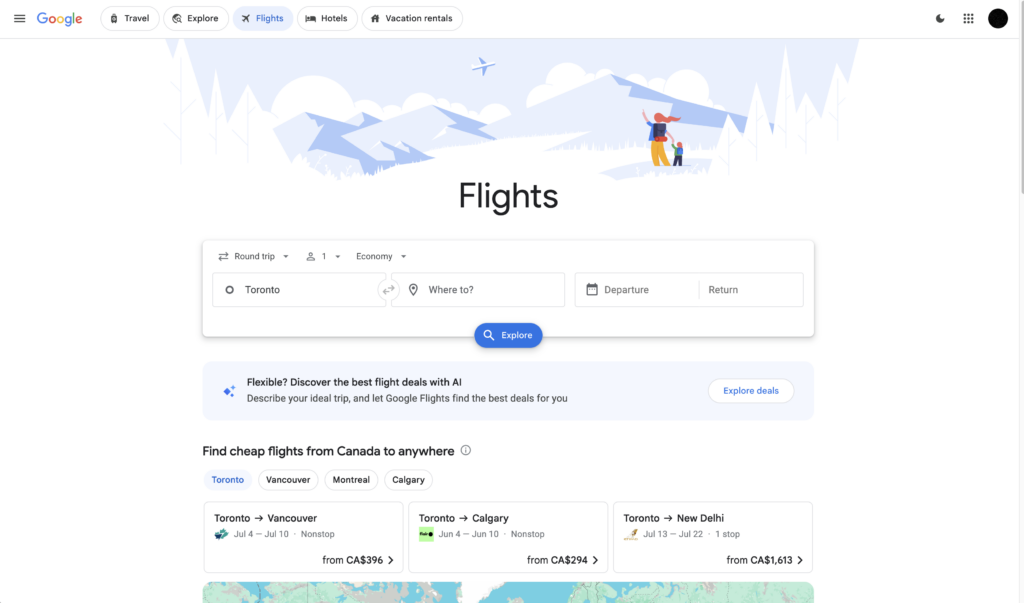
Google Flights allows you to compare fares across an entire month, explore destinations on an interactive map, track price changes, and instantly see whether current fares are considered high, average, or low compared with historical pricing. If you’re open to multiple destinations or travel dates, its Explore feature can uncover routes you may never have thought to search for—often at surprisingly affordable prices.
Skyscanner for “Everywhere” Searches
If you’re flexible with where you want to go, Skyscanner is one of the best tools available. Its “Everywhere” search feature allows you to enter your departure airport and instantly see the cheapest destinations available around the world, sorted by price.

This can be incredibly useful for spontaneous travelers, backpackers, digital nomads, or anyone simply looking for the best value rather than one exact destination. Skyscanner also includes many low-cost and regional carriers that may not always appear on other search engines, making it especially valuable for international and budget-focused travel planning.
Kayak for Price Forecasting
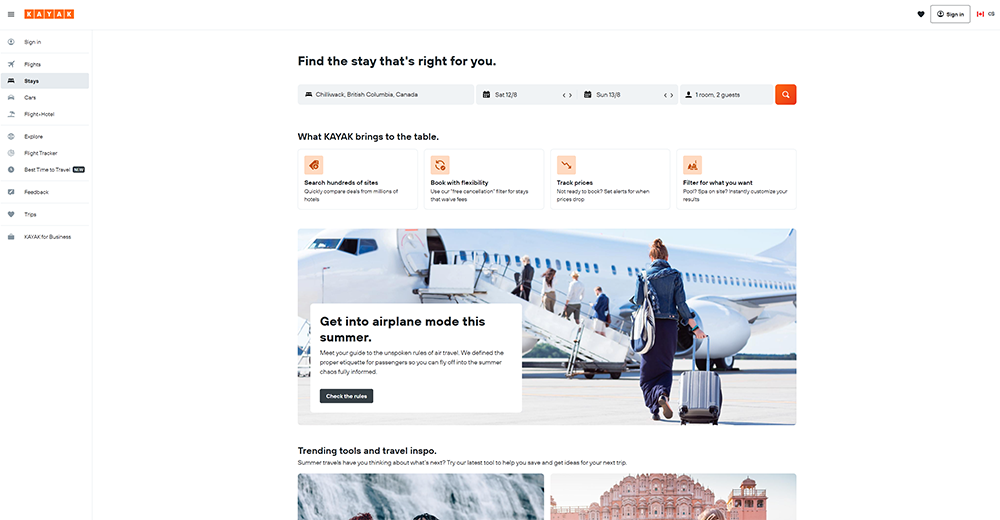
This can be extremely helpful if you’re tracking a route over several weeks and aren’t sure whether current prices are competitive. Kayak also makes it easy to compare nearby airports, flexible dates, multiple cabin classes, and complex itineraries, giving travelers a broader picture before committing to a booking.
Momondo for Hidden Deals
Momondo has built a strong reputation for finding routes and booking combinations that sometimes don’t appear on other platforms. It often surfaces smaller online travel agencies, alternate airline pairings, and creative multi-leg combinations that can result in significant savings.
Its visual fare charts and flexible date tools make it easy to spot cheaper travel windows, while its broader search coverage can occasionally uncover fares that larger platforms miss. For travelers willing to do a little extra comparison, Momondo can be an excellent secondary search tool before booking.
Compare Multiple Platforms Before Booking
No single flight comparison tool always shows the cheapest fare. Different platforms may include different airlines, booking partners, promotional fares, or regional carriers, which means prices can vary from one site to another for the exact same route.
A smart strategy is to search the same route on several platforms before making your final decision. Start with Google Flights for speed and flexibility, check Skyscanner for budget carriers, compare forecasts on Kayak, and see if Momondo uncovers anything cheaper. Spending an extra five or ten minutes comparing platforms can often save you far more than you’d expect.
Always Double-Check With the Airline
Once you’ve found a great fare on a comparison site, don’t rush to book immediately. In many cases, the exact same flight may be available directly through the airline for the same price—or occasionally even less.
Booking directly with carriers like Air Canada, WestJet, or Lufthansa can also provide added benefits such as easier schedule changes, simpler refunds, loyalty point earnings, and more direct customer support if travel plans change. Comparison tools help you find the deal, but booking direct often provides extra peace of mind.
6
JAN
Set Price Alerts
One of the smartest ways to find cheap flights without constantly refreshing search results is to let technology do the monitoring for you. Flight prices can change multiple times a day, and some of the best deals appear without warning—sometimes lasting only a few hours before disappearing again. If you’re manually checking fares every day, it’s easy to miss a sudden price drop or spend weeks obsessively watching the same route.
That’s where price alerts become incredibly powerful. Instead of repeatedly searching the same flights, price alert tools track your chosen route automatically and notify you whenever fares rise, drop, or show unusual pricing activity. Whether you’re planning months ahead or waiting for the perfect deal, setting alerts can help you book with confidence and avoid overpaying.
How Flight Price Alerts Work
Price alerts monitor specific routes, dates, or flexible travel windows and automatically scan for fare changes across airlines and booking platforms. When the price changes—whether it drops by $20 or $200—you receive an email, app notification, or browser alert so you can act quickly.
These tools continuously compare live airfare data, historical pricing patterns, and seat availability behind the scenes. Instead of guessing whether today’s fare is good, you’re watching real market movement over time, giving you a much clearer picture of when a deal is actually worth booking.
Best Platforms for Setting Price Alerts
Several flight comparison tools offer built-in fare tracking, and each has its own strengths depending on how flexible your trip is. Some are better for exact routes, while others are ideal if your dates or destinations are still open.
Popular platforms include:
- Google — excellent for calendar tracking and historical fare comparisons
- Skyscanner — great for flexible destinations and “Everywhere” searches
- Kayak — helpful price forecasting and booking recommendations
- Hopper — app-based predictions on whether to book now or wait
Many experienced travelers track the same route on more than one platform to make sure no deal slips through the cracks.
Track Routes Before You’re Ready to Book
You don’t need to be ready to purchase immediately to start tracking fares. In fact, some of the best deals go to travelers who begin monitoring prices weeks—or even months—before they plan to book. This gives you time to learn what’s normal for your route and recognize a genuine bargain when it appears.
For example, if you’re planning a trip from Vancouver to Tokyo next spring, tracking fares several months in advance helps you spot seasonal trends, promotional sales, and temporary drops that casual travelers might miss.
Watch Multiple Date Combinations
If your dates are flexible, don’t limit yourself to tracking just one departure and return combination. Create multiple alerts across several date ranges, nearby airports, or even neighboring destinations to maximize your chances of finding the best deal.
For example, instead of tracking only a flight to Rome on one specific week, you might also track nearby departures into Milan or Venice across several weeks. Small adjustments like these can sometimes save hundreds of dollars.
Know When to Book After a Price Drop
A lower fare doesn’t always mean it’s the lowest it will go—but waiting too long can be just as risky. Once your alerts show a significant drop compared with what you’ve been seeing consistently, it’s often a strong signal that you’ve found a competitive price.
If a route you’ve been tracking for weeks suddenly drops well below its usual range, especially during peak travel periods, it’s often smarter to book rather than gamble on it dropping further. Cheap flights rarely stay cheap forever, and the travelers who act quickly are usually the ones who secure the best deals.
Let Alerts Work While You Plan
One of the best things about price alerts is that they work quietly in the background while you focus on everything else—researching destinations, planning itineraries, booking accommodations, or simply deciding where you want to go.
Instead of chasing deals, you let deals come to you. Over time, this simple habit can save hundreds—or even thousands—of dollars on flights, especially for families, long-haul travelers, and anyone planning multiple trips each year.
7
JAN
Search Nearby Airports
One of the most overlooked ways to save money on flights is simply being flexible about which airport you fly into—or out of. Many travelers automatically choose the closest major airport without realizing that another airport just an hour or two away could offer dramatically lower fares, better flight times, or more route options. Depending on the destination, choosing an alternate airport can sometimes save hundreds of dollars on the exact same trip.
Airlines price routes differently based on competition, airport fees, passenger demand, and available carriers. A busy international hub may offer dozens of daily departures, while a nearby regional airport might have lower operating costs or cheaper budget airline routes. By expanding your airport search radius and comparing nearby options, you can often unlock better deals without changing your travel plans significantly.
Compare Airports Near Your Departure City
Before booking, it’s worth checking every realistic airport within driving distance of your home. Even if one airport is slightly farther away, the savings on airfare can easily outweigh the extra travel time, parking, or fuel costs. This is especially true for travelers living near major metropolitan areas with multiple airport options.
For example, travelers in Vancouver may find different fares departing from Vancouver International Airport, regional airports in the Lower Mainland, or even nearby airports across the border in Bellingham or Seattle. A slightly longer drive can sometimes translate into surprisingly large savings.
Look Beyond the Main Airport at Your Destination
Your destination airport matters just as much as your departure airport. Many popular cities are served by multiple airports, and flying into a secondary airport can often be significantly cheaper than landing at the main international hub.
A trip to London, for example, could arrive through airports such as Heathrow Airport, Gatwick Airport, Stansted Airport, or Luton Airport—each with very different pricing depending on the airline and travel dates. The same city, the same vacation, but potentially a very different airfare.
Nearby Cities Can Unlock Better Deals
Sometimes the cheapest airport isn’t in your destination city at all. Flying into a nearby city and completing the journey by train, bus, ferry, or rental car can often cut airfare dramatically while adding flexibility to your trip.
For example, travelers heading to Amsterdam may find cheaper flights into Brussels or Düsseldorf. Those visiting Paris might discover lower fares into Brussels or Lille. In regions with excellent rail networks, this strategy can save a substantial amount without adding much inconvenience.
Budget Airlines Often Use Secondary Airports
Low-cost carriers frequently operate from smaller or secondary airports where operating fees are lower. These airports may be farther from city centers, but they often offer some of the cheapest international fares available.
Airlines like Ryanair, easyJet, and AirAsia commonly use alternate airports to keep prices competitive. If your goal is to travel as cheaply as possible, checking these secondary airports can open up routes and fares that major hubs simply can’t match.
Always Factor in Ground Transportation
While alternate airports can save money, it’s important to look at the total trip cost—not just the airfare. A cheaper flight can quickly lose its value if it requires expensive taxis, long transfers, overnight hotel stays, or inconvenient public transportation.
Before booking, compare the full picture: airfare, airport parking, fuel, border crossings, train tickets, shuttles, and transfer times. Sometimes a slightly more expensive ticket into the main airport actually ends up being the better overall value. The smartest travelers don’t just chase the cheapest flight—they compare the cheapest complete journey.
8
JAN
Search in Incognito Mode, Myth or Reality?
If you’ve spent any time searching for cheap flights online, you’ve probably heard the advice: “Always search in incognito mode or airlines will raise the price when they see you coming back.” It’s one of the most repeated travel hacks on the internet, shared in blogs, forums, and social media videos for years. The idea is simple—flight websites supposedly track your searches using browser cookies, recognize that you’re interested in a particular route, and then increase the fare to pressure you into booking quickly.
But is this actually true, or is it just one of travel’s most persistent myths? The reality is a little more complicated. While private browsing can sometimes be useful for general online privacy, there’s very little evidence that simply searching for flights repeatedly in a normal browser directly causes airlines to increase prices specifically for you. In most cases, airfare changes are driven by real market demand, fare availability, and airline pricing algorithms—not because your browser is being watched.
Where the Incognito Myth Started
The belief likely began because travelers genuinely noticed flight prices changing after repeated searches. Someone would check a fare in the morning, return later that day, and suddenly see a higher price. Naturally, it felt like the airline had recognized their interest and increased the fare to create urgency.
In reality, airfare can change constantly for everyone, not just one individual user. Flights may sell several seats while you’re away, cheaper fare classes may disappear, competitors may adjust pricing, or demand may spike for that route. What feels personal is usually just the airline’s dynamic pricing system responding to real-time market activity.
Do Airlines Use Cookies to Change Prices?
Browser cookies absolutely exist, and travel websites do use them to remember preferences, saved searches, login sessions, and language settings. However, there’s little reliable evidence that major airlines are individually raising fares based solely on your personal search history or browser cookies.
Most airline pricing systems focus on route demand, booking trends, fare inventory, and revenue optimization across thousands of users—not one person searching from one laptop. While online travel agencies may personalize advertising or remarketing, airfare itself is generally determined by broader market data rather than your individual browsing behavior.
What Incognito Mode Actually Does
Incognito mode, private browsing, or private windows simply prevent your browser from saving local data like cookies, search history, cached files, and login sessions after you close the window. It can be useful for keeping searches private on shared devices or testing websites without saved preferences affecting the experience.
However, incognito mode does not hide your location, your IP address, airline inventory changes, or real-time market pricing. If airfare changes while you’re browsing privately, it’s almost always because the market changed—not because the airline suddenly “forgot who you were.”
When Incognito Mode Can Still Be Helpful
Even though it probably won’t magically unlock cheaper airfare, private browsing can still be useful during flight research. It gives you a cleaner browsing experience, prevents saved sessions from affecting display preferences, and allows you to compare results without autofilled filters or previous searches influencing what you see.
It can also be useful when comparing prices across multiple booking platforms, testing regional versions of travel websites, or checking routes on shared computers. While it’s not a secret discount tool, it can help keep your research organized and consistent.
What Actually Causes Flight Prices to Change
If cookies aren’t usually the reason, what really causes airfare to move? The biggest factors are seat availability, fare class inventory, route demand, seasonality, competitor pricing, and how close the flight is to departure. When cheaper fare buckets sell out, the next pricing tier becomes available automatically, making it appear as though prices suddenly jumped.
Airlines also monitor how quickly flights are filling, upcoming holidays, special events, fuel costs, and market demand across thousands of travelers at once. A fare that changes while you’re researching usually isn’t reacting to you—it’s reacting to the market.
Focus on Real Money-Saving Strategies
Rather than relying on browser tricks, travelers are far better off focusing on strategies that consistently produce real savings. Flexible dates, nearby airports, fare alerts, shoulder-season travel, and using flight comparison tools will almost always make a bigger difference than browsing privately.
Incognito mode isn’t harmful, and there’s no downside to using it if you prefer. But when it comes to finding genuinely cheap flights, understanding how airfare actually works will take you much further than chasing internet myths.
9
JAN
Consider Budget Airlines
When searching for cheap flights, one of the most effective ways to reduce your travel costs is to consider flying with budget airlines. Also known as low-cost carriers, these airlines have completely changed the way people travel by offering significantly lower fares than traditional full-service airlines. For flexible travelers, backpackers, digital nomads, families on a budget, and anyone looking to stretch their travel dollars further, budget airlines can open the door to destinations that might otherwise feel out of reach.
That said, the cheapest advertised fare doesn’t always tell the full story. Budget airlines operate very differently from traditional carriers, often charging separately for services that may be included with standard airlines, such as checked baggage, seat selection, food, or even airport check-in. Understanding how low-cost carriers work—and how to book them strategically—can help you unlock incredible savings without being caught off guard by hidden fees.
What Are Budget Airlines?
Budget airlines are carriers built around one simple goal: getting passengers from point A to point B for the lowest possible base fare. To achieve this, they strip away many of the extras commonly included with traditional airlines and allow travelers to pay only for the services they actually want.
Instead of including checked baggage, meals, flexible ticket changes, or premium seating in every fare, low-cost carriers offer these as optional add-ons. This model allows travelers who pack light and travel simply to take advantage of extremely low fares, sometimes for a fraction of what full-service airlines charge on the same route.
Budget Airlines Can Unlock Incredible Savings
One of the biggest advantages of flying budget airlines is the potential savings—especially on short-haul and regional routes. It’s not uncommon to find flights across Europe, Southeast Asia, or parts of North America for less than the cost of a train ticket or a tank of gas.
Airlines such as Ryanair, easyJet, AirAsia, Flair Airlines, and Jetstar have made it possible for travelers to visit multiple cities or even multiple countries on a surprisingly small budget. Used strategically, budget airlines can turn one vacation into a multi-destination adventure.
Watch for Hidden Fees
The biggest mistake many travelers make with budget airlines is assuming the low advertised fare is the final price. In reality, many low-cost carriers generate additional revenue through optional fees for baggage, seat selection, boarding priority, snacks, and sometimes even printing boarding passes at the airport.
A $39 flight can quickly become a $120 flight if you’re not paying attention to extras. Before booking, always review baggage allowances, cabin size restrictions, payment fees, and airport check-in policies. Understanding the full cost upfront helps you avoid surprises and ensures you’re actually getting a good deal.
Travel Light to Maximize Savings
Budget airlines reward travelers who pack efficiently. Most low-cost carriers offer their best fares to passengers traveling with only a small personal item or compact carry-on, while checked baggage often comes with substantial fees.
Learning to pack light can dramatically increase the value of budget airfare. A simple carry-on strategy not only saves money but also makes airport transfers faster, eliminates baggage claim delays, and gives you more flexibility when moving between cities. For many experienced travelers, mastering carry-on-only travel is one of the biggest keys to flying cheaply.
Budget Airlines Often Use Secondary Airports
To keep operating costs low, many budget airlines operate from smaller or secondary airports rather than major international hubs. These airports often charge lower landing fees, allowing airlines to offer more competitive ticket prices.
For example, a trip to London may arrive at London Stansted Airport instead of the busier Heathrow Airport. While this can mean longer transfers into the city center, the airfare savings can often make it worthwhile—especially for flexible travelers.
Budget Airlines Aren’t Always the Cheapest Option
Although low-cost carriers often advertise the lowest fares, they’re not automatically the best deal every time. Once you factor in baggage fees, airport transfers, seating charges, and stricter cancellation policies, a traditional airline may sometimes offer better overall value.
Before booking, compare the total trip cost—not just the base fare. Full-service airlines such as Air Canada, WestJet, or Lufthansa may include baggage, meals, loyalty points, and more flexible booking conditions that make a slightly higher ticket price worth it.
When Budget Airlines Make the Most Sense
Budget airlines tend to work best for short trips, weekend getaways, regional hops, multi-city adventures, and travelers who pack light and prioritize price over luxury. They’re especially valuable in regions with strong low-cost competition, where dozens of affordable routes connect major travel hubs.
If you’re flexible, organized, and willing to travel a little lighter, budget airlines can become one of the most powerful tools in your cheap flight strategy—helping you see more of the world while spending significantly less on airfare.
10
JAN
Use Points, Miles & Travel Rewards
One of the smartest long-term strategies for saving money on flights is learning how to use points, airline miles, and travel rewards. While finding cheap fares through search tools and flexible dates can save you hundreds of dollars, travel rewards can sometimes reduce your airfare even further—or eliminate it altogether. Many experienced travelers regularly fly for a fraction of the normal cost simply by strategically collecting and redeeming points earned through flights, everyday spending, promotions, and travel credit cards.
At first, points and loyalty programs can seem complicated, but once you understand the basics, they can become one of the most powerful tools in your travel budget. Whether you’re taking one family vacation each year or planning multiple international adventures, building travel rewards into your everyday spending can unlock free flights, seat upgrades, airport lounge access, priority boarding, hotel stays, and a wide range of additional travel perks.
How Airline Miles Work
Most airlines offer loyalty programs that reward travelers with points or miles every time they fly. The more you travel with the same airline—or airlines within the same alliance—the more rewards you can accumulate over time. These miles can often be redeemed for flights, cabin upgrades, extra baggage, priority services, and sometimes even hotels or rental cars.
Airlines such as Air Canada, WestJet, British Airways, and Delta Air Lines all operate reward programs that allow travelers to earn points with every eligible booking. Even if you only travel a few times each year, consistently collecting miles instead of ignoring them can add up surprisingly quickly.
Travel Credit Cards Can Accelerate Rewards
One of the fastest ways to build travel points is through travel rewards credit cards. Many cards allow you to earn points on everyday purchases such as groceries, gas, dining, streaming subscriptions, online shopping, and family expenses—turning spending you’re already doing into future travel opportunities.
Some cards also offer welcome bonuses worth tens of thousands of points after meeting a minimum spending requirement, which can sometimes cover an entire domestic flight or make a significant dent in an international ticket. Used responsibly, travel credit cards can become one of the most effective ways to build rewards without needing to fly constantly.
Airline Alliances Multiply Your Earning Potential
One of the best-kept secrets in travel rewards is that you don’t always have to fly with one specific airline to earn or redeem points. Many airlines belong to global alliances that allow travelers to collect and use rewards across multiple partner carriers.
Major alliances such as Star Alliance, SkyTeam, and Oneworld connect airlines all over the world. This means points earned on one airline may be redeemed on another, opening far more destinations and flight options than many travelers realize.
Everyday Spending Can Lead to Free Flights
You don’t need to be a frequent flyer to benefit from travel rewards. Many travelers earn the majority of their points through everyday purchases rather than airline tickets. Groceries, gas, utility bills, dining out, subscriptions, online shopping, and even recurring household expenses can all help build your balance over time.
For families, this can be especially powerful. Routine monthly spending that would happen anyway can gradually turn into discounted flights, airport lounge access, or even free vacations. Over the course of a year, strategic spending can generate enough rewards to significantly reduce travel costs.
Redeem Points Strategically for Maximum Value
Not all point redemptions offer the same value. Some travelers redeem points for gift cards, merchandise, or small discounts, but in many cases, flights and premium travel upgrades provide the highest return per point.
International long-haul flights, premium economy upgrades, business class seats, and peak-season travel often deliver the best redemption value. Learning when to use cash versus points—and comparing redemption options before booking—can help stretch your rewards much further and maximize every mile you’ve earned.
Watch for Bonus Promotions and Transfer Partners
Airlines, credit card providers, and travel programs regularly run promotions that allow you to earn bonus points or transfer rewards between programs at favorable rates. These limited-time offers can significantly increase the value of your rewards if you’re paying attention.
Some credit card programs allow points to be transferred to multiple airline partners, giving you more flexibility when redeeming flights. A well-timed transfer bonus or airline promotion can sometimes turn an ordinary rewards balance into enough points for an international ticket that might otherwise cost hundreds—or even thousands—of dollars.
Start Early and Stay Consistent
Travel rewards work best as a long-term strategy rather than a last-minute solution. The earlier you start collecting points, joining loyalty programs, and paying attention to promotions, the faster your rewards begin to compound.
Even if you only travel once or twice a year, consistency matters. Signing up for airline programs, using travel cards responsibly, and collecting points from everyday spending can quietly build a travel fund in the background—one that can eventually make your next adventure significantly cheaper, more comfortable, or even completely free.
11
JAN
Book at the Right Time
When it comes to finding cheap flights, knowing when to book can be just as important as knowing where to search. Many travelers assume booking as early as possible always guarantees the best price, while others wait until the last minute hoping for a dramatic deal. In reality, airline pricing is far more strategic than that. Fares constantly move based on demand, route popularity, seasonality, competition, and how quickly seats are selling.
There’s no single perfect day or magic formula that works for every flight, but understanding airline booking patterns can dramatically improve your chances of securing a great fare. By learning when airlines typically release promotions, when fares begin to climb, and how booking windows vary between domestic and international travel, you can stop guessing and start booking with confidence.
Book Domestic Flights Within the Sweet Spot
For short-haul and domestic travel, the cheapest fares often appear within a relatively specific booking window rather than immediately after flights are released. Airlines typically open their schedules many months in advance, but early fares are not always the lowest available.
In many cases, booking domestic flights one to three months before departure offers the best balance of availability and competitive pricing. Booking too early may mean paying standard release pricing, while waiting too long can leave you paying premium fares as cheaper fare classes sell out. Monitoring routes during this sweet spot often produces some of the best domestic deals.
International Flights Usually Require More Planning
Long-haul international flights tend to follow a different pattern. Because these routes involve more planning, larger aircraft, and higher seasonal demand, airlines often release their most competitive fares further in advance than domestic routes.
For many international trips, the best fares often appear anywhere from three to eight months before departure, especially for popular routes to destinations like Europe, Asia, or Africa. Waiting too long on long-haul routes—particularly during summer, Christmas, or school holidays—can lead to significantly higher prices as inventory becomes limited.
Peak Season Requires Booking Earlier
f you’re planning to travel during high-demand periods, timing becomes even more important. School holidays, summer vacation, Christmas, New Year’s, spring break, and major global events often cause flights to fill much earlier than normal.
For peak-season travel, it’s often wise to start monitoring fares as early as possible and be prepared to book once a competitive price appears. Routes to destinations like London, Tokyo, or Honolulu during holiday periods rarely get cheaper as departure approaches. Waiting for a last-minute deal during peak travel often ends in disappointment—or a very expensive ticket.
Last-Minute Deals Are Less Common Than People Think
Many travelers still believe airlines slash prices right before departure to fill empty seats, but in today’s world of sophisticated revenue management, true last-minute bargains are far less common than they once were.
Airlines know that last-minute travelers—especially business travelers—often have fewer options and are willing to pay more. Instead of dropping prices, fares frequently rise sharply in the final weeks before departure. While occasional promotions do happen, relying on last-minute deals is usually a risky strategy unless your travel plans are extremely flexible.
Watch Prices Before You’re Ready to Book
One of the smartest booking strategies is to start tracking fares long before you plan to purchase. Watching a route for several weeks or months helps you understand what a normal fare looks like and makes it much easier to recognize a genuine deal when it appears.
Using price alerts through platforms like Google, Skyscanner, or Kayak allows you to observe pricing patterns without constantly searching manually. The more familiar you become with your route, the easier it becomes to book confidently.
Don’t Wait for the Absolute Lowest Price
One of the biggest mistakes travelers make is waiting too long because they hope fares will drop just a little more. While it’s natural to want the absolute cheapest ticket possible, airfare is unpredictable, and a good fare today may disappear tomorrow.
If you’ve been tracking a route, understand the average pricing, and suddenly see a fare that’s clearly below normal—especially during busy travel periods—it’s often smarter to book rather than gamble. Successful travelers don’t always book the lowest price ever seen—they book when the price is genuinely good and move on with confidence.
Flexibility Always Improves Timing
Even when you understand booking windows, flexibility remains your greatest advantage. Travelers who can shift their trip by a few days, travel during shoulder seasons, or depart from alternate airports often find far better pricing than those locked into fixed plans.
The combination of smart timing, flexible dates, price tracking, and understanding airline pricing gives you the best chance of finding truly affordable airfare. Timing matters—but timing combined with flexibility is where the real savings happen.
12
JAN
Frequently Asked Questions
By the time you’ve finished researching flights, comparing airports, tracking fares, and watching for deals, it’s normal to still have a few lingering questions. Flight pricing can feel unpredictable, and with so many travel hacks floating around online, it’s not always easy to know which advice actually works. Below are some of the most common questions travelers ask when searching for cheap flights, along with practical answers that can help you book smarter and travel with confidence.
What Is the Cheapest Day to Book Flights?
There’s no single “magic” day of the week that always guarantees the cheapest airfare. While older travel advice often claimed Tuesdays were best, modern airline pricing is driven by real-time algorithms that constantly adjust fares based on demand, competition, and seat availability.
Instead of focusing on one specific booking day, it’s far more effective to track prices over time, set fare alerts, and book when you see a price that’s clearly lower than the normal range for your route. Flexible travelers who monitor prices consistently usually find much better deals than those waiting for a specific day of the week.
Are Flights Cheaper on Tuesdays?
Flights themselves—not necessarily bookings—can often be cheaper on Tuesdays, Wednesdays, and sometimes Saturdays. This is because business travelers and weekend vacationers typically create higher demand on Mondays, Thursdays, Fridays, and Sundays.
If your schedule allows, shifting your departure or return by even one or two days can sometimes save hundreds of dollars. Using flexible calendar tools on flight comparison platforms makes it easy to spot which days offer the best value.
How Far in Advance Should I Book a Flight?
The ideal booking window depends on your destination, season, and route. Domestic flights often offer strong pricing one to three months before departure, while international flights typically reward travelers who begin monitoring fares three to eight months in advance.
Peak-season travel—such as Christmas, summer holidays, or school breaks—usually requires booking even earlier. The key is not simply booking early, but watching fares over time so you recognize a genuinely competitive price when it appears.
Is It Better to Book One-Way or Round-Trip Flights?
In many cases, round-trip tickets still offer excellent value, especially on traditional full-service airlines. However, one-way tickets have become increasingly competitive, particularly when flying with budget carriers or mixing airlines across multiple regions.
For flexible travelers, comparing both options can sometimes uncover major savings. Booking separate one-way flights may also open up better schedules, alternate airports, or multi-city itineraries that wouldn’t be possible with a traditional round-trip booking.
Do Flight Prices Go Up the More You Search?
This is one of the biggest travel myths online. While prices do change frequently, there’s very little evidence that airlines are individually raising prices just because you searched multiple times.
In most cases, airfare changes happen because seats are selling, fare classes are filling up, competitors are adjusting prices, or demand on that route is changing in real time. Private browsing can be useful for privacy, but it’s unlikely to magically reveal cheaper fares.
Are Budget Airlines Really Cheaper?
Budget airlines can offer incredible savings, especially for short-haul routes, regional travel, and travelers who pack light. However, the lowest advertised fare doesn’t always reflect the final price once baggage fees, seat selection, airport transfers, and other extras are added.
Before booking, always compare the total trip cost—not just the base fare. Sometimes a full-service airline offers better overall value once all the extras are included.
Should I Book Directly With the Airline?
In many cases, yes. Flight comparison tools are excellent for finding deals, but once you’ve found a competitive fare, it’s often worth checking the airline’s website directly before booking.
Booking directly can make schedule changes, cancellations, refunds, and customer support much easier if your travel plans change. You may also earn loyalty points, access member pricing, or qualify for added travel benefits that third-party booking sites may not offer.
Are Last-Minute Flights Ever Cheaper?
True last-minute deals are much less common than they used to be. Modern airlines use sophisticated pricing systems and often raise fares as departure approaches, especially on popular routes and during busy travel seasons.
Occasional promotions do happen, but relying on last-minute deals is generally risky unless your travel dates, destinations, and airports are completely flexible. Most travelers find better value by planning ahead and tracking fares over time.
Can I Save Money by Flying Into Another City?
Absolutely. Flying into nearby cities, secondary airports, or regional hubs can sometimes reduce airfare dramatically. A short train ride, bus transfer, or rental car may open up much cheaper flight options than flying directly into your final destination.
This strategy works especially well in regions with excellent transportation networks, such as Europe, Southeast Asia, and parts of North America.
What’s the Single Best Way to Find Cheap Flights?
There’s no single trick that works every time. The best results usually come from combining several smart strategies: being flexible with your dates, staying open to multiple destinations, comparing nearby airports, using fare alerts, checking multiple search platforms, and understanding how airline pricing actually works.
The travelers who consistently find the best deals aren’t usually lucky—they’re simply flexible, patient, and prepared to book when the right opportunity appears.