
Antigua Guatemala is a small city that punches well above its weight. Tucked into the Panchoy Valley about 25 miles (40 km) southwest of modern Guatemala City, it was founded by Spanish conquistadors in 1543 and served as the capital of the Kingdom of Guatemala for more than 230 years. After repeated earthquakes destroyed much of the city, the colonial authorities moved the capital to present‑day Guatemala City in 1776, leaving “La Antigua” as a living museum of 16th–18th‑century architecture. Thanks to its grid‑like street plan, collection of baroque churches and ruins and its cultural importance, Antigua Guatemala was designated a UNESCO World Heritage Site in 1979. Today the city has roughly 50,000 residents, yet it remains one of Central America’s most visited destinations.
Set at 1,530 m (5,020 ft) above sea level and watched over by three spectacular volcanoes—Volcán de Agua, Volcán de Fuego and Acatenango—Antigua enjoys a mild highland climate year‑round. National Geographic notes that the city’s grid layout is an early example of urban planning in Latin America and that its colorful colonial homes are constructed around a central square. Visitors are greeted by cobblestone streets, the silhouettes of volcanic peaks and the scent of roasted coffee drifting from cafés.
The guide below combines the highlights of the original Passport the World article with additional research and personal observations to create a more comprehensive resource. It includes 30+ things to do, insider tips, links to further information.
Founded in 1543 as Santiago de los Caballeros after the original capital (near Iximche) was destroyed by a lahar.
Capital of the Captaincy General of Guatemala (the Spanish administrative region covering present‑day Guatemala, Belize, Honduras, El Salvador, Nicaragua and Chiapas, Mexico) for 230 years until 1776.
Approximately 50,000 people call Antigua home.
Inscribed on UNESCO’s World Heritage List in 1979 for its preserved Spanish baroque architecture and its significance in Central American history.
Mild highland climate with a dry season (November–March) and a rainy season (April–October). National Geographic describes the weather as “consistently mild”.
1,530 m above sea level in the Panchoy Valley, surrounded by the volcanoes Agua, Fuego and Acatenango.
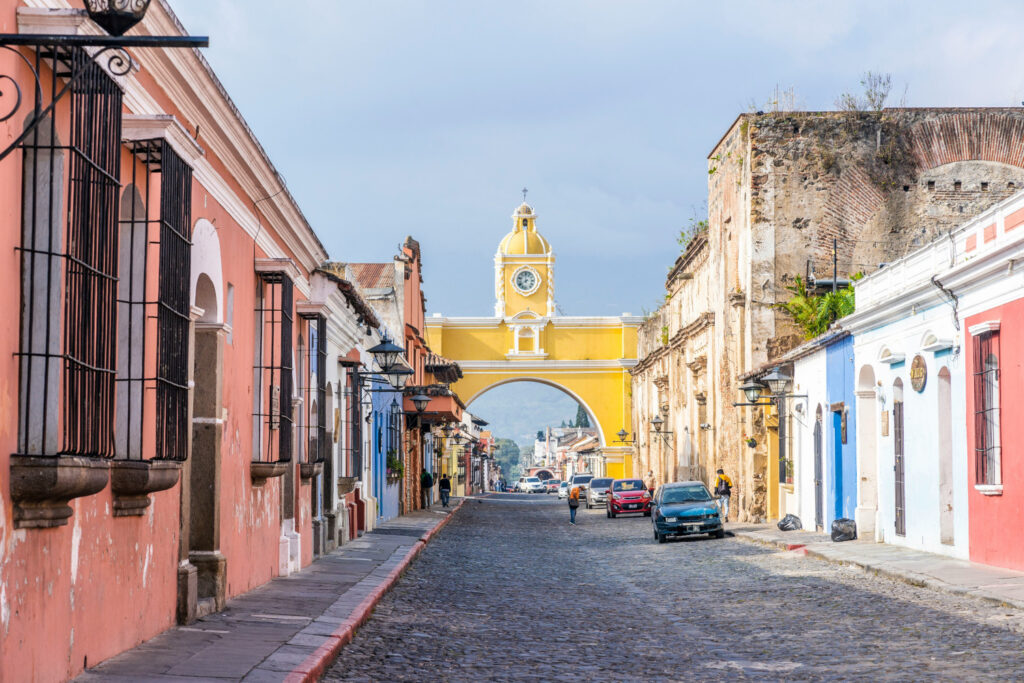
Antigua’s historic centre is laid out on a north–south/east–west grid with Parque Central at its heart. From the plaza, streets radiate like a chessboard: 5a Avenida Norte runs toward the iconic Santa Catalina Arch, while Calle del Arco connects some of the city’s most photogenic facades. Because the old town is compact, it’s easy to explore on foot. Throughout the guide we refer to intersections by Avenida and Calle names to help you navigate.
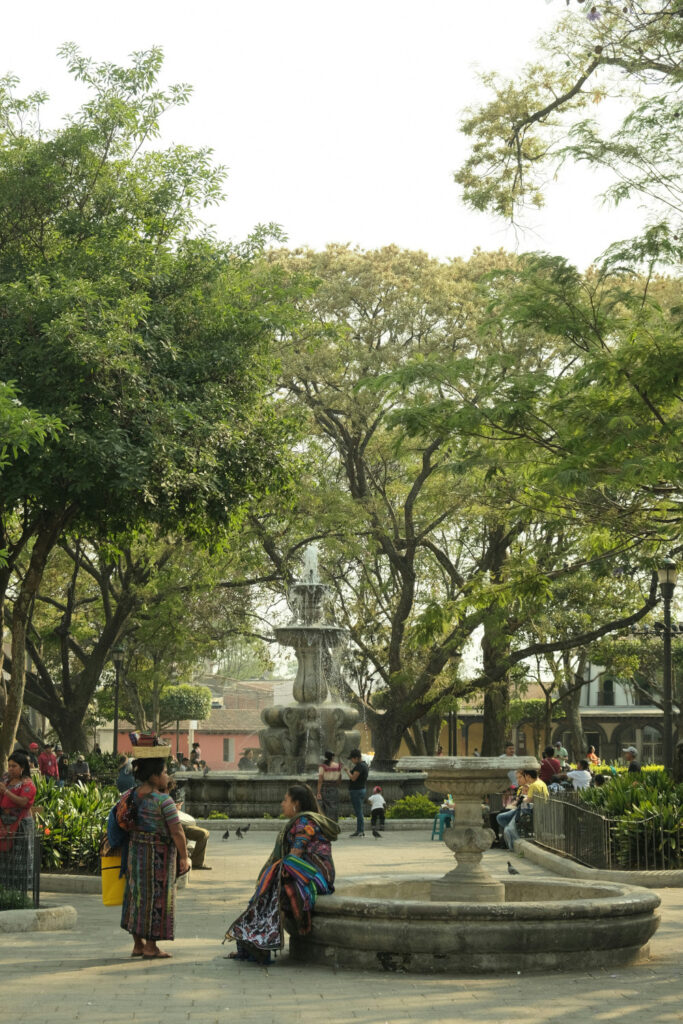
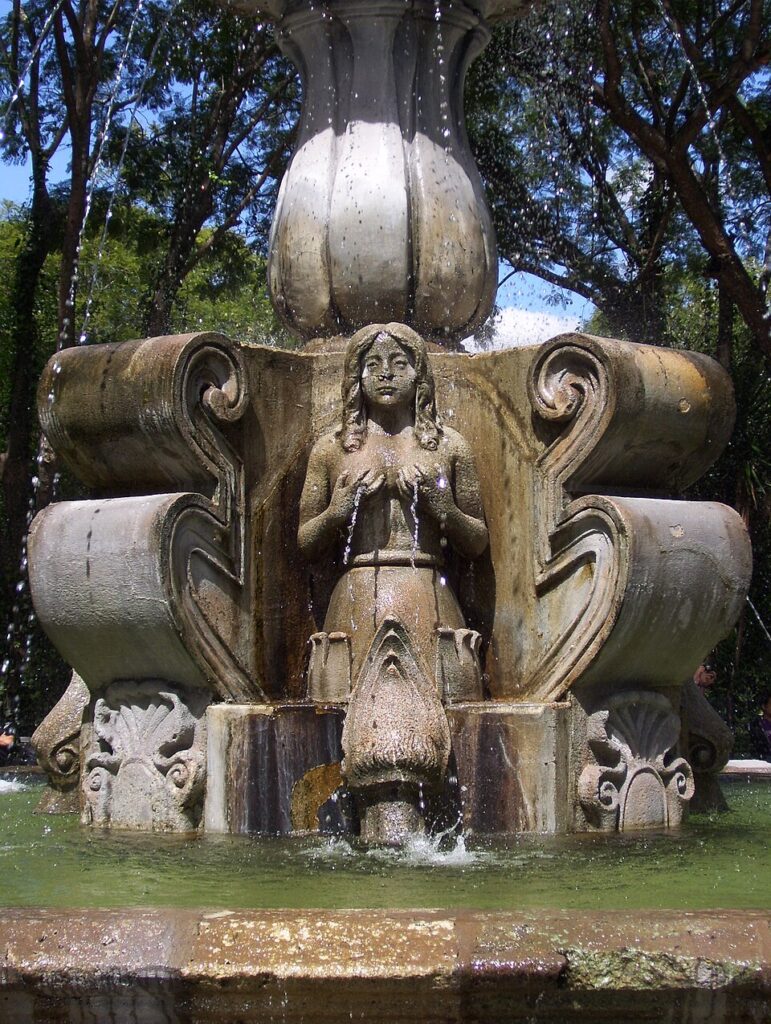
This is where everything naturally leads back to. Parque Central feels like the heartbeat of Antigua, and it’s the perfect place to slow down and just take it all in. Right in the centre of the park, you’ll find the Fuente de las Sirenas, a historic fountain that’s surrounded by shaded benches, trimmed trees, and open walkways. I found myself coming back here multiple times, sitting under the trees and watching the rhythm of the city—locals chatting, kids playing, vendors passing through with snacks and handmade goods. It’s lively without feeling overwhelming, and the mix of greenery, history, and everyday life makes it one of the easiest places to just pause and enjoy the moment.
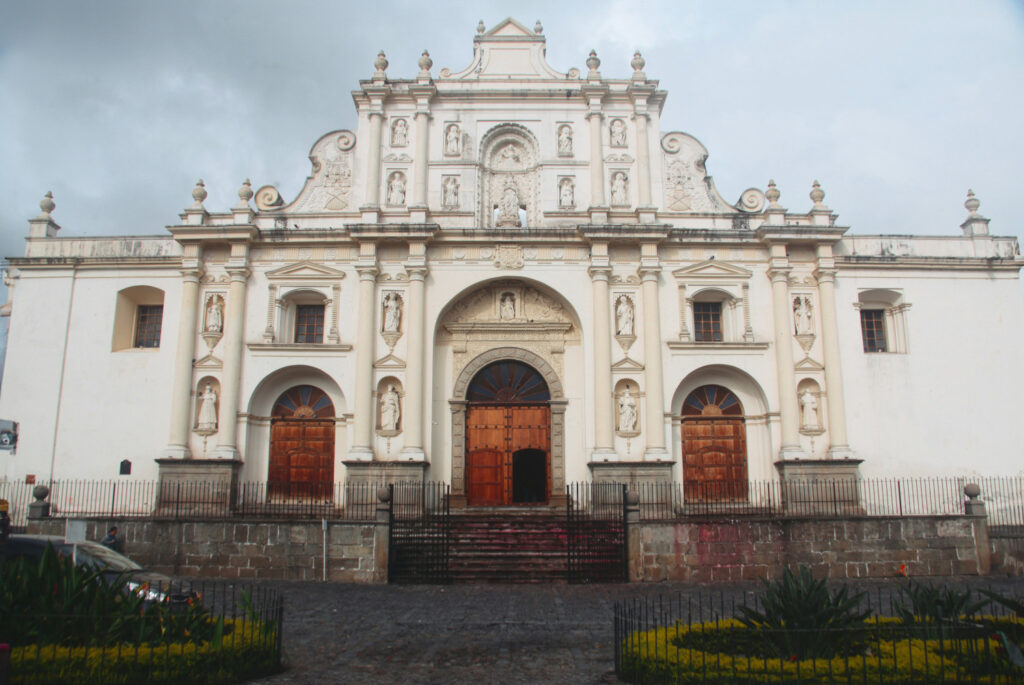
San José Cathedral & Ruins
The current cathedral façade facing the plaza hides the ruins of its 16th‑century predecessor. You can enter via the side gate to explore the collapsed nave and vaults that were destroyed by earthquakes. The adjacent museum displays religious art and provides context on rebuilding efforts.
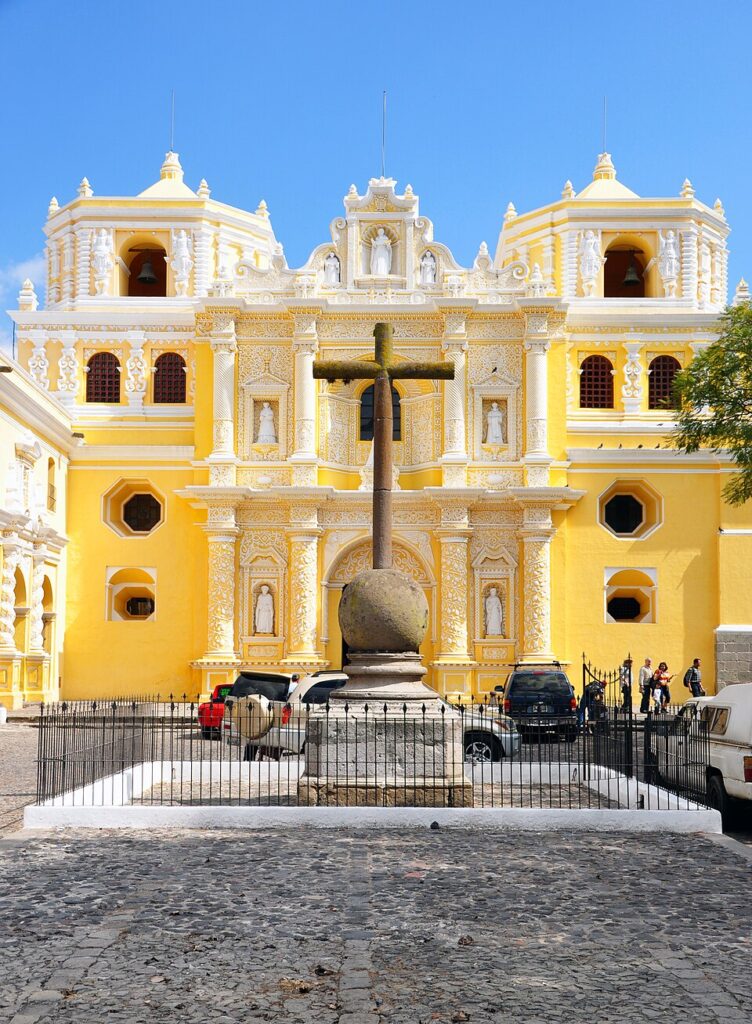
Iglesia de La Merced
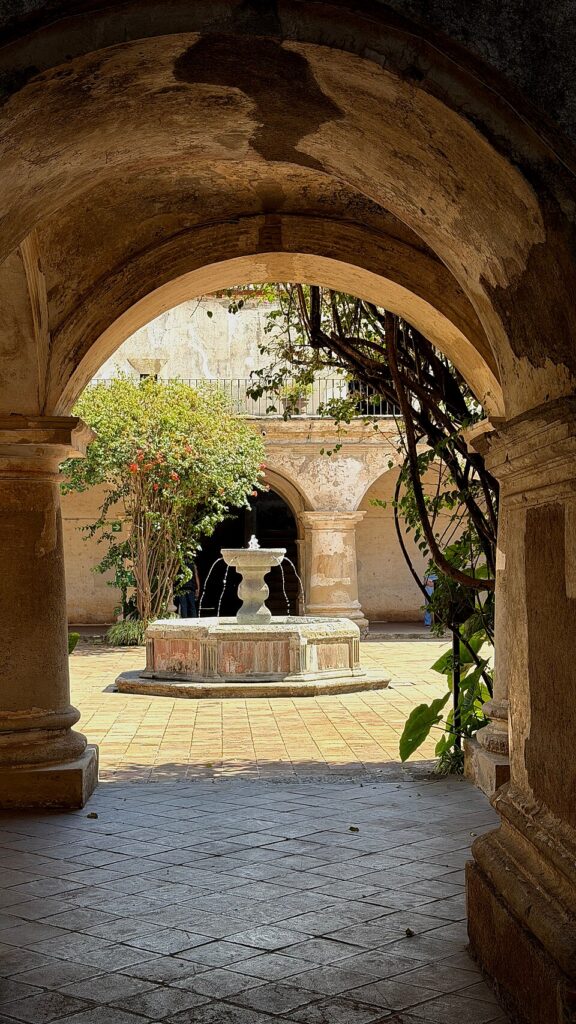
Head north along 5a Avenida and you’ll come across one of Antigua’s most striking landmarks, instantly recognizable by its bright yellow Baroque façade. The church stands out against the surrounding streets with its intricate detailing and bold color. Step inside to explore the peaceful courtyard, where a large historic fountain sits at the center—one of the most beautiful and often overlooked features of the site.
Convento Capuchinas
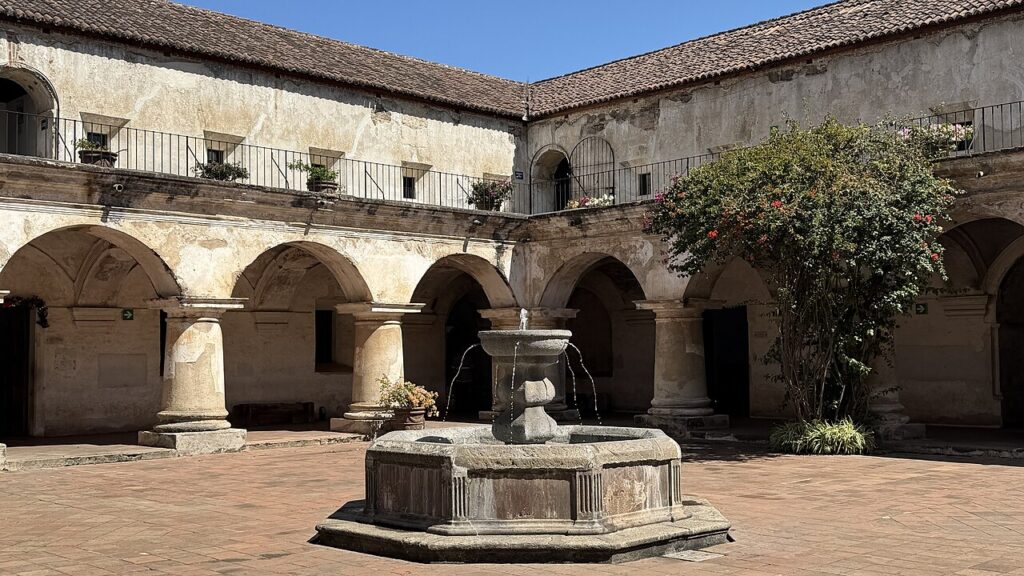
Continuing your walk through the colonial centre, make your way to Convento de las Capuchinas, one of the most fascinating and architecturally unique sites in Antigua. This former 18th-century convent stands out for its unusual circular tower, where nuns once lived in small, individual cells arranged around a central chamber. As you wander through the open courtyards and quiet stone corridors, the space feels both peaceful and slightly mysterious, offering a glimpse into the secluded daily life of the women who once lived here. With its soft light, aged textures, and symmetrical design, it’s easily one of the most photogenic stops in the city—and often far less crowded than the main attractions nearby.
Santa Catalina Arch (Arco de Santa Catalina)
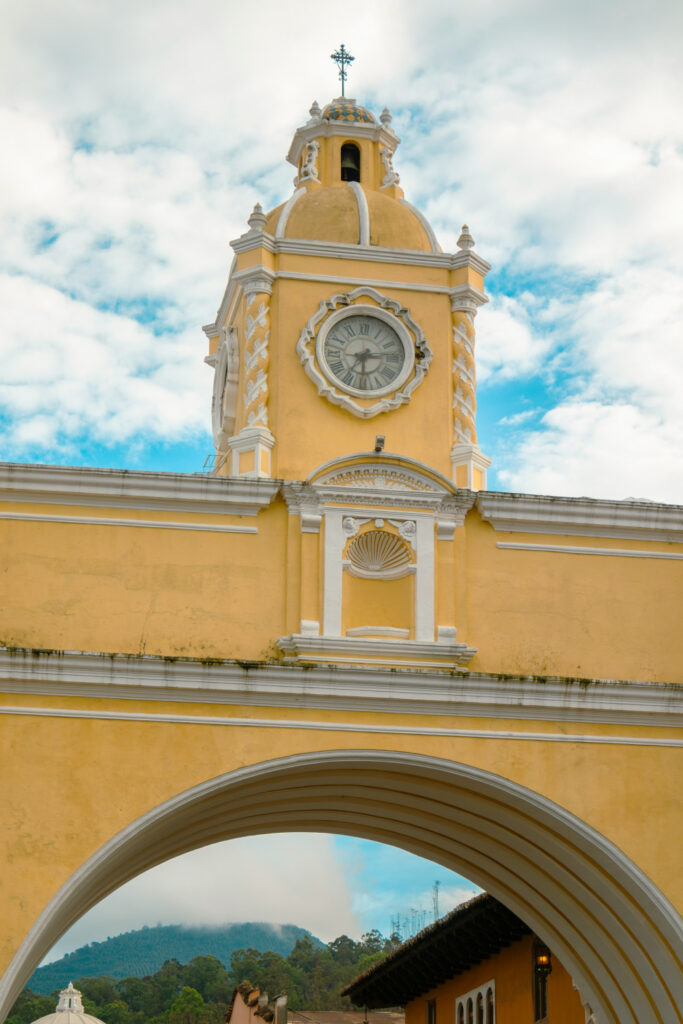
Continuing through the colonial centre, you’ll eventually reach the iconic Santa Catalina Arch, one of the most photographed landmarks in Antigua. Stretching across a cobblestone street, the bright yellow arch was originally built in the 17th century to allow cloistered nuns to pass between buildings without being seen. Today, it perfectly frames Volcán de Agua in the distance, creating one of the city’s most recognizable views. It’s worth visiting early in the morning when the streets are quiet and the light is soft, giving you that classic, postcard-perfect shot without the crowds.
One of the most captivating things about Antigua is the way history is left beautifully exposed. Instead of rebuilding everything after the devastating earthquakes of 1717, 1751, and 1773, many churches and monasteries were preserved in their ruined state. Today, these spaces feel almost surreal—roofless sanctuaries open to the sky, crumbling archways wrapped in greenery, and quiet courtyards that have been transformed into gardens and museums. Exploring them gives you a deeper sense of the city’s past while offering some of the most peaceful and photogenic spots in Antigua.
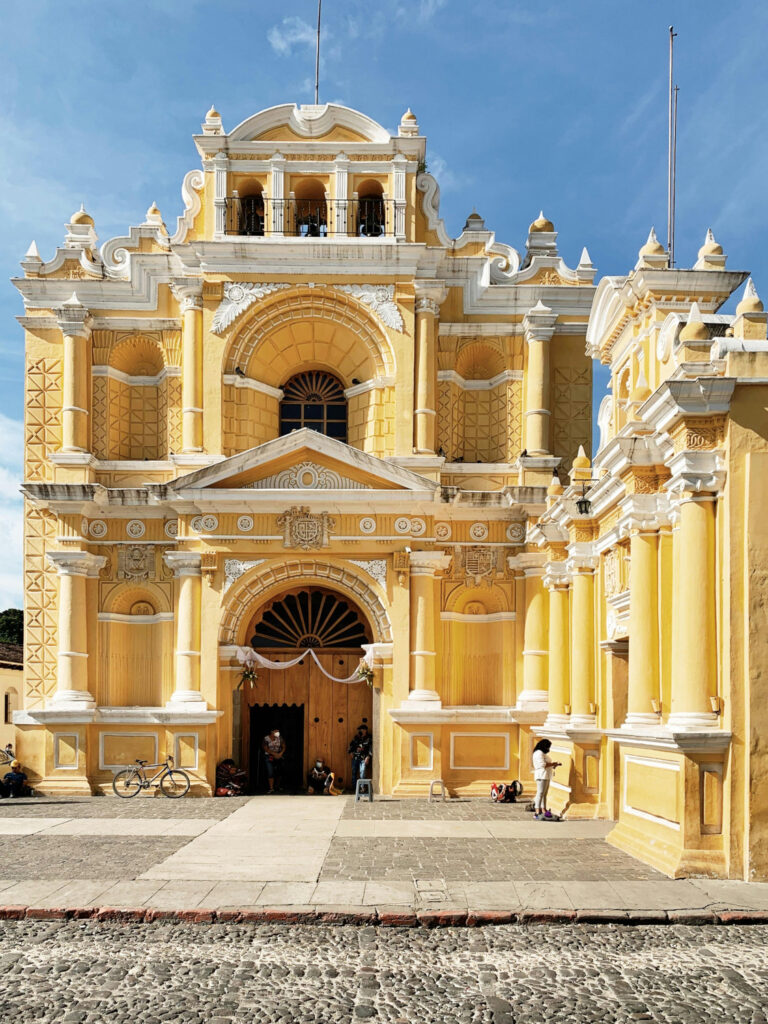
Iglesia de San Francisco & Hermano Pedro Museum
This historic complex is one of the most important religious sites in Antigua, home to the tomb of Hermano Pedro, Guatemala’s first saint. The church itself is still active, but step beyond it and you’ll find tranquil cloistered courtyards and a small museum that tells the story of his life and legacy. It’s a place where locals come to light candles and pray, giving the space a quiet, spiritual atmosphere that feels very much alive.